
Darlingtonia californica
Darlingtonia californica
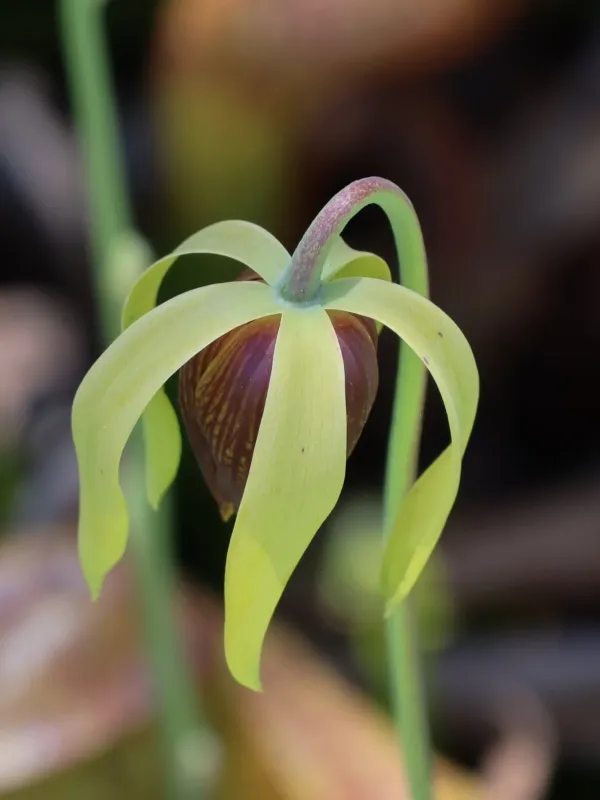
Description
Sowing dates
Propagation of Darlingtonia californica in cultivation is primarily achieved through seeds, as the division of rhizomes is an extremely labor-intensive and traumatic process. Seeds require a period of cold stratification for 4 to 6 weeks to successfully break dormancy and stimulate germination.
Sowing should be done in late winter or early spring on the surface of a prepared, moist, acidic substrate. It is essential to maintain consistently high humidity and a temperature range of 15–20 degrees Celsius until the first sprouts appear.
The germination process is quite lengthy and can span several months. Light should be bright but indirect, as intense direct sunlight can easily dehydrate the delicate seedlings of the cobra lily.
Young plants develop very slowly, so transplanting into individual pots is recommended no sooner than one year after sowing. Great care must be taken to protect the fragile root system during all stages of transplanting.
When using vegetative propagation, side offsets that form on the creeping rhizome of a mature plant are utilized. These are separated with a sharp, sterile tool during the active growth period, followed by a quarantine period to ensure successful rooting.
Growing requirements
Darlingtonia californica, belonging to the Sarraceniaceae family, is a unique plant that requires specific environmental conditions for successful growth. In its natural habitat, it grows in peat bogs and along cold mountain stream banks in Northern California and Oregon.
A key factor for the survival of this species is a cool root system, which mimics the temperature of flowing mountain water. The substrate temperature must be significantly lower than the ambient air temperature during hot summer days.
The growing substrate must consist of a mixture of long-fibered peat, perlite, and live sphagnum moss to ensure excellent aeration and drainage. Fertilizer use is strictly prohibited, as the plant obtains nutrients exclusively by capturing insects.
Watering must be done using only distilled or rainwater with a low mineral salt content. Pots should be equipped with a bottom-watering system that allows the roots to stay constantly in a moderately damp environment.
Light is a critical factor: active photosynthesis requires 10 to 12 hours of bright, filtered light daily. If lighting is insufficient, the pitcher traps will lose their characteristic vibrant green or red pigmentation.
Main diseases and pests
Fungal diseases are the primary threat to Darlingtonia, typically developing in conditions of stagnant moisture and poor ventilation. Various forms of root rot often occur when using an unsuitable substrate with poor permeability.
Among pests, the two-spotted spider mite and mealybugs are the most dangerous. These insects reproduce rapidly in conditions of low air humidity, infesting the inner surfaces of the pitchers and the young shoots of the plant.
Aphids can also cause significant damage by sucking sap from developing leaves, which leads to tissue deformation. Pest control should rely on gentle insecticides or careful manual removal to prevent chemical burns to the sensitive tissues.
Failure to manage temperature and overheating of the roots inevitably leads to the wilting of pitchers and plant death. During hot weather, agronomists recommend mulching the substrate surface with live sphagnum moss to help maintain local cooling.
Prevention of all mentioned issues is based on strict adherence to agro-technical standards: ensuring a flow of fresh air, regular water replacement in the irrigation system, and preventing the overheating of the plant's root crown.