
Alabama pitcher plant
Sarracenia alabamensis
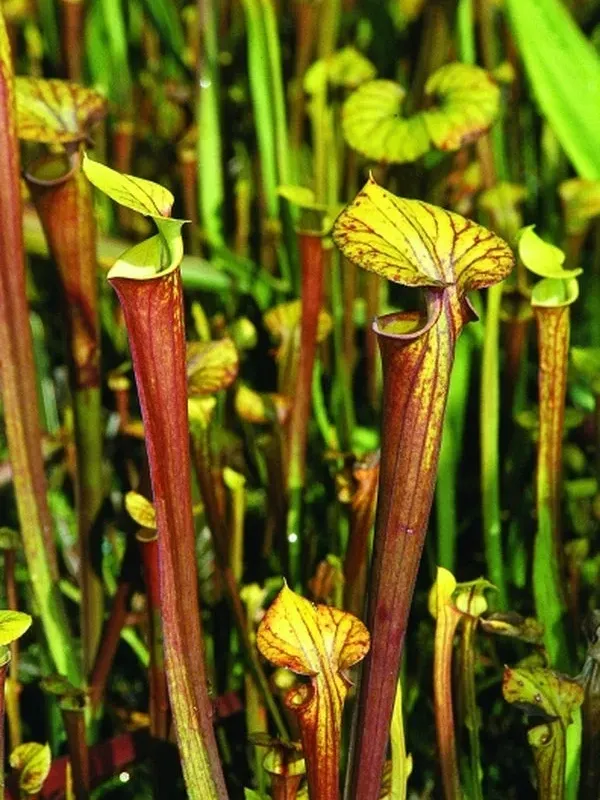
Description
Sowing dates
Propagation of Sarracenia alabamensis by seeds necessitates a cold stratification period of approximately 4 to 6 weeks to ensure germination.
The optimal sowing time is late winter, allowing the seedlings to develop during the increasing daylight hours of the early spring.
Seeds should be sown on the surface of damp long-fibered sphagnum moss and left exposed to light, as darkness inhibits the germination process.
High humidity and consistent moisture levels must be maintained throughout the entire period until the first set of true leaves emerges.
Division of the rhizome is an alternative method of propagation, typically performed when the plant is repotted in early spring.
Growing requirements
Belonging to the Sarraceniaceae family, this species requires a nutrient-poor environment, such as a mix of peat moss and perlite, to flourish.
The Alabama pitcher plant thrives in full sunlight, which is essential for the development of its colorful, digestive tubular traps.
Pure water is mandatory; municipal water containing chlorine, salts, or minerals will inevitably cause toxicity and damage to the root system.
Constant moisture is vital, and the pots should be kept in a shallow tray filled with water to simulate the plant's natural bog habitat.
During the winter months, the plant undergoes a dormant phase and must be kept in a cool environment to reset its biological clock for the next season.
Main diseases and pests
Common insect pests include aphids and scale insects, which may congregate on the new leaf growth and weaken the plant structure.
Fungal infections, particularly root rot, are often caused by poor drainage or overly stagnant water during the colder winter dormancy period.
The accumulation of dead, decaying insects inside the traps can sometimes lead to localized rot if the traps are excessively crowded.
Improper ventilation in indoor settings can lead to mold growth on the moss surface, which may spread to the crown of the plant.
Regular maintenance, including the removal of dead or withered pitchers, is essential to prevent secondary diseases and improve airflow.