
Palaquium thwaitesii
Palaquium thwaitesii
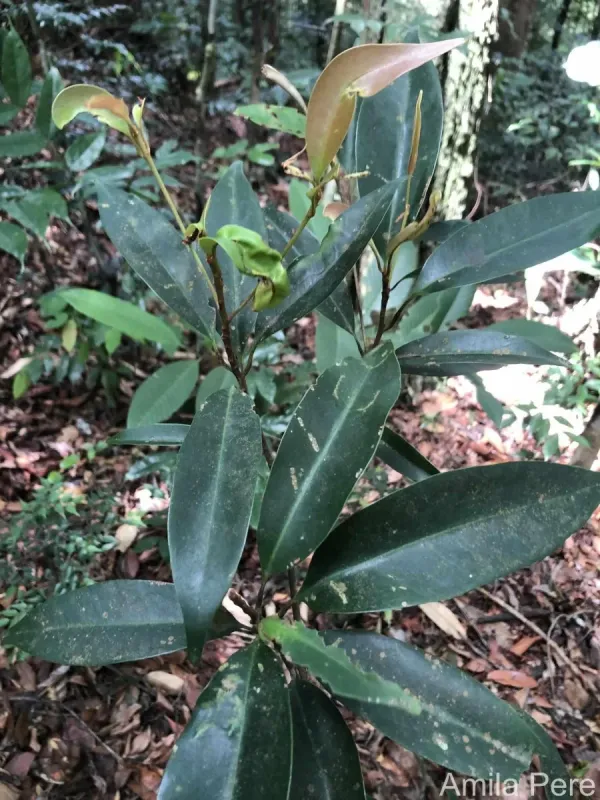
Description
Growing requirements
Palaquium thwaitesii is a significant evergreen tropical tree species belonging to the Sapotaceae family. Native to the rainforests of Sri Lanka, this tree is highly valued for its unique botanical properties and its role in local forest ecosystems.
The tree thrives in environments characterized by high annual temperatures and substantial, consistent rainfall. It is best adapted to the tropical zones where the humidity levels remain high throughout the entire year, preventing desiccation of the canopy.
Regarding soil requirements, Palaquium thwaitesii prefers deep, fertile, and well-drained loamy soils rich in organic matter. Waterlogged conditions are detrimental to the species, as they inhibit root respiration and foster pathogenic growth.
Botanically, the species is known for its slow growth rate and the presence of milky latex within its vascular system, which historically contains gutta-percha. The tree structure is robust, with dense foliage adapted for efficient light capture in shaded forest environments.
Effective forest management for this species involves maintaining the integrity of the forest canopy, as young saplings are highly sensitive to extreme direct solar radiation and require shelter during their early developmental stages.
Main diseases and pests
The primary threat to Palaquium thwaitesii is the ongoing degradation of its natural habitat due to forest clearing and land-use changes. These anthropogenic pressures limit the species' ability to maintain stable population levels in the wild.
In managed plantations, the trees are susceptible to various fungal pathogens that target both the bark and the leaf tissues. These infections often result in a significant decrease in the overall health and sap yield of the trees.
Insect pests, particularly those that bore into the wood or feed on the foliage, pose a continuous risk. Integrated pest management strategies are essential to mitigate the impact of these organisms without harming the surrounding ecosystem.
Environmental fluctuations, particularly irregular precipitation patterns, can stress the trees, making them more susceptible to opportunistic diseases. Proper water management and periodic health assessments are recommended for all cultivated sites.
Competition from fast-growing invasive plant species can hinder the establishment of new growth. Proactive vegetation management, including regular clearing around the tree base, is necessary to ensure the survival of young specimens.