
Valantia muralis
Valantia muralis
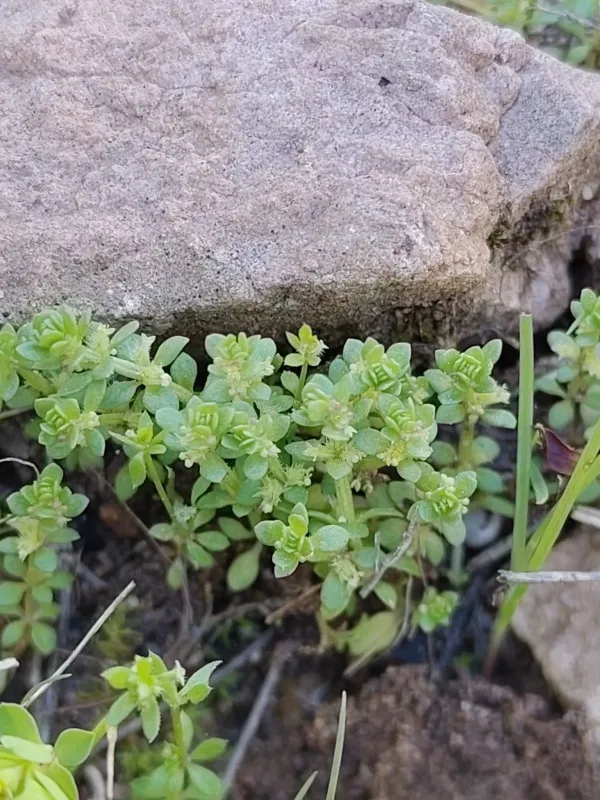
Description
Growing requirements
Valantia muralis, commonly known as wall bedstraw, is an annual herbaceous plant belonging to the Rubiaceae family. This species is native to the Mediterranean basin, where it typically colonizes sunny and rocky habitats.
The plant demonstrates a remarkable ability to thrive in challenging environments, such as rock crevices, stone walls, and stony hillsides. It prefers well-drained, nutrient-poor soils where competition from other plant species is naturally low.
Botanically, Valantia muralis features small, whorled leaves and inconspicuous flowers that are typical for the bedstraw group. Its growth habit is usually low-spreading or ascending, allowing it to take advantage of microclimates provided by stones and rock formations.
Climatic adaptation is centered around the Mediterranean cycle: the plant germinates during the cool, wet autumn and winter months, completes its life cycle by late spring, and survives the dry, hot summer in the form of dormant seeds.
Agricultural or garden use of this species is largely limited to botanical collections or wild-style gardening. It requires minimal intervention, as it is fully adapted to local precipitation patterns and natural light exposure.
Main diseases and pests
Like many species adapted to extreme environments, Valantia muralis is generally robust against common plant diseases. However, excessive moisture during the vegetative phase can lead to fungal infections affecting the roots and collar.
The primary threat to the health of the plant is poor soil drainage. When cultivated in substrates that retain water for long periods, the plant becomes prone to damping-off and crown rot, which are often fatal to young specimens.
In terms of pests, the plant is susceptible to common sap-sucking insects if kept in closed or overcrowded conditions. However, in its natural habitat, these pests rarely reach levels that threaten the stability of the population.
Invasive weed species represent a significant threat to its survival. Because Valantia muralis is a small, slow-growing plant, it is easily shaded out by taller, more aggressive grasses or weeds, which can displace it from its niche.
Habitat loss due to urbanization and the loss of traditional stone structures where it often grows remains the most significant long-term risk. Conservation efforts focus on preserving the rocky sites that provide its primary ecological foundation.