
Valantia hispida
Valantia hispida
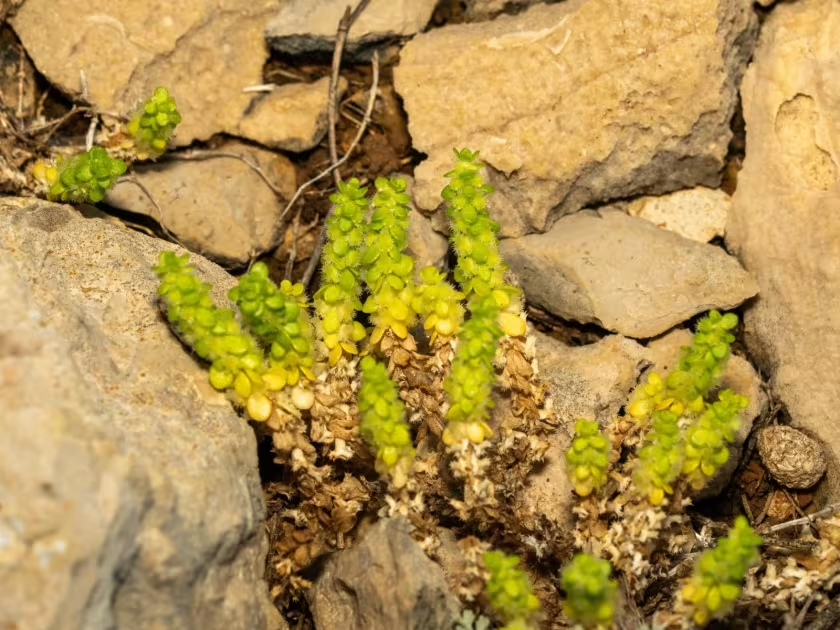
Description
Sowing dates
Valantia hispida is an annual herbaceous plant belonging to the Rubiaceae family. In its natural habitat, the plant's life cycle begins during the autumn or winter, which is typical for ephemeral species adapted to Mediterranean climate patterns.
To ensure successful sowing in controlled environments, seed stratification is necessary to mimic natural temperature fluctuations. The optimal time to initiate growth is when the average daily soil temperature stabilizes between +10 and +15 degrees Celsius.
When cultivating, seeds are sown at a shallow depth, usually not exceeding 0.5 to 1 centimeter. Because the seeds are tiny, they require firm contact with moist soil to promote rapid and uniform germination, ensuring that the seed bed is properly prepared beforehand.
The plant exhibits a high sensitivity to photoperiod during its early stages of development. A shorter day length tends to favor the development of the basal rosette, while an increase in day length and light intensity triggers the shift to the generative phase.
Proper scheduling of sowing times allows for effective management of flowering and fruiting stages. Failure to adhere to these schedules often results in premature stem elongation, leaving the plant with insufficient vegetative mass to sustain a healthy yield.
Growing requirements
Valantia hispida has specific growth requirements stemming from its origin in the arid and semi-arid regions of the Mediterranean. The plant thrives in well-drained, calcareous soils with a neutral or slightly alkaline pH level.
The species possesses xerophytic adaptations, allowing it to withstand brief periods of drought. However, for full root system development during the peak growth phase, moderate but consistent moisture is essential, while waterlogging must be strictly avoided.
Optimal climatic conditions include mild, moist winters and warm, dry summers. The plant is extremely sensitive to sudden frosts during active sap flow, and the ideal temperature range for its overall metabolism is between +18 and +25 degrees Celsius.
High light intensity is a critical factor for the metabolism of Valantia. Under shaded conditions or when light is insufficient, the stems tend to become etiolated and weak, which negatively impacts the overall quality and survival of the plant.
Agronomic management must also include strict weed control. Due to its relatively slow initial growth rate, Valantia often struggles to compete with more aggressive weeds, making regular manual or mechanical weeding an essential part of its cultivation cycle.
Yield
The economic use of Valantia hispida is currently limited, focusing primarily on botanical research or niche collections. Industrial yield figures have not been standardized, as it is not currently grown as a mass-market agricultural crop.
Biological productivity of the plant's biomass depends heavily on solar radiation levels and the availability of nutrients in the soil. On average, the yield of above-ground biomass remains modest, consistent with the nature of small-stature ephemeral plants.
Maximum seed yield is achieved by providing stable moisture levels during the flowering phase. Valantia produces nut-like fruits that show high germination rates when proper harvesting and post-harvest drying techniques are applied.
Potential improvements in yield are linked to selective breeding for larger vegetative rosettes and enhanced resistance to lodging. The use of controlled growth regulators in small doses may assist in increasing the mass of inflorescences, which is vital for seed collection.
The economic viability of cultivating this crop at a commercial scale still requires further study. Currently, most harvesting is limited to small-scale production or the collection of wild populations, preventing the establishment of large industrial yield metrics.
Main diseases and pests
The most common threats to Valantia hispida are fungal diseases that develop due to excessive soil or air moisture. Root rot can severely impact young seedlings, often leading to rapid mortality if drainage is not properly managed.
Among pests, sucking insects such as aphids pose the greatest danger, as they colonize young shoots and inflorescences. These pests not only weaken the plant but can also serve as vectors for various viral diseases that are highly detrimental to young crops.
In open-field conditions, plants are susceptible to slugs and snails, especially during periods of high humidity. Mechanical damage caused by these pests provides entry points for secondary infections that spread quickly throughout the planting area.
Excessive nitrogen fertilization is an additional risk factor, as it encourages the rapid development of soft tissues. Such succulent plants become more attractive to phytophages and are less resistant to temperature fluctuations and pathogens.
Preventive measures include crop rotation, the timely removal of infected plants, and the use of biological control agents. Avoiding high planting densities is crucial to ensure proper air circulation, which prevents the build-up of moisture and the spread of pathogens.
Harvesting
Harvesting Valantia hispida is conducted after the seeds reach full biological maturity. Because the plant is prone to shedding seeds, identifying the exact moment of ripeness is critical—harvest should occur when the fruits are mature but before widespread natural dispersal.
The best time for harvesting is during the early morning hours, after the dew has evaporated but before the intense sun encourages the seed capsules to open. This timing minimizes seed loss during the mechanical cutting or manual collection of the above-ground biomass.
After harvesting, the material requires thorough cleaning to remove impurities and vegetative debris. Drying is performed in well-ventilated rooms, away from direct sunlight, to ensure the preservation of the seeds' viability and overall quality.
Storage is ideally managed using airtight containers or paper bags kept in a cool, dry place. Following these conditions ensures that the seed's germinating capacity remains stable for two to three growing seasons, making it a reliable option for future cultivation.
If the harvest is intended for medicinal or raw material purposes, it should be collected during the peak flowering phase. During this time, the concentration of secondary metabolites in the leaves and stems is at its highest, ensuring the superior quality of the harvested product.