
Hamelia patens
Hamelia patens Jacq.
Description
Growing requirements
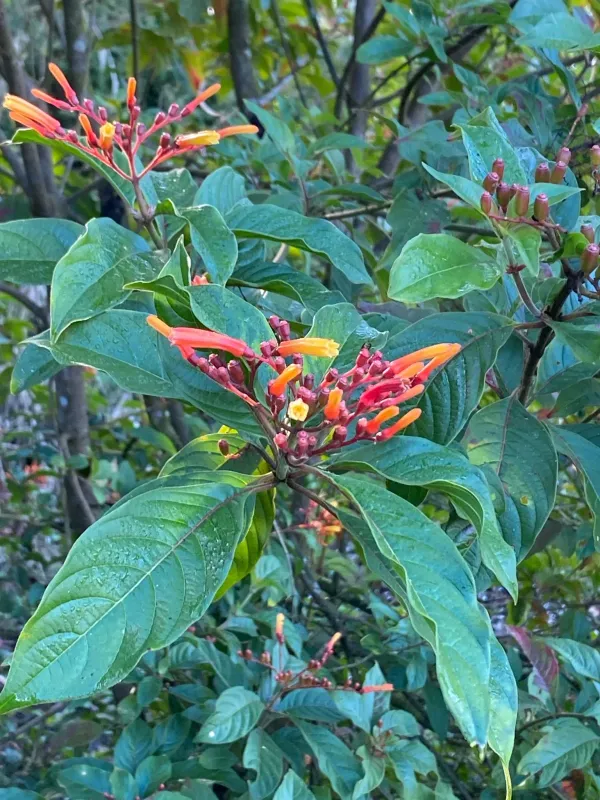
Hamelia patens, commonly known as firebush, belongs to the Rubiaceae family and is native to the subtropical and tropical regions of the Americas. This evergreen shrub or small tree is widely valued for its long-lasting, tubular orange-red flowers that attract various pollinators, including hummingbirds and butterflies.
Botanically, the plant is characterized by its whorled leaves and its ability to maintain a dense habit. In its native habitat, it can reach significant heights, but in cultivation, it is often pruned to maintain a manageable size, making it a versatile choice for borders, hedges, or container gardening.
The plant thrives in warm climates and requires full sun to partial shade for optimal growth and flowering. It is highly sensitive to frost, necessitating protection or indoor cultivation in cooler regions where temperatures drop below freezing, as it cannot survive severe cold exposure.
Soil requirements for Hamelia patens include well-drained, fertile soil with a neutral to slightly acidic pH. While it is relatively adaptable to various soil types, waterlogging must be strictly avoided, as the root system is susceptible to decay when exposed to persistently saturated conditions.
Agrotechnical management involves regular pruning to promote a bushy structure and encourage vigorous flowering. During the growing season, moderate fertilization with a balanced fertilizer can enhance foliage growth and the production of vibrant flowers, ensuring the health and aesthetic appeal of the shrub.
Main diseases and pests
Common pests that affect Hamelia patens include spider mites and aphids, which can cause leaf yellowing and stunted growth if left unmanaged. Regular monitoring of the foliage, especially the undersides of the leaves, is recommended for early detection and mitigation.
Diseases are generally infrequent but may occur if the plant is stressed due to poor drainage or low light conditions. Root rot is the primary threat associated with overwatering; therefore, ensuring proper soil aeration and efficient drainage systems is crucial for preventing such issues.