
Fernbush
Chamaebatiaria millefolium
Description
Growing requirements
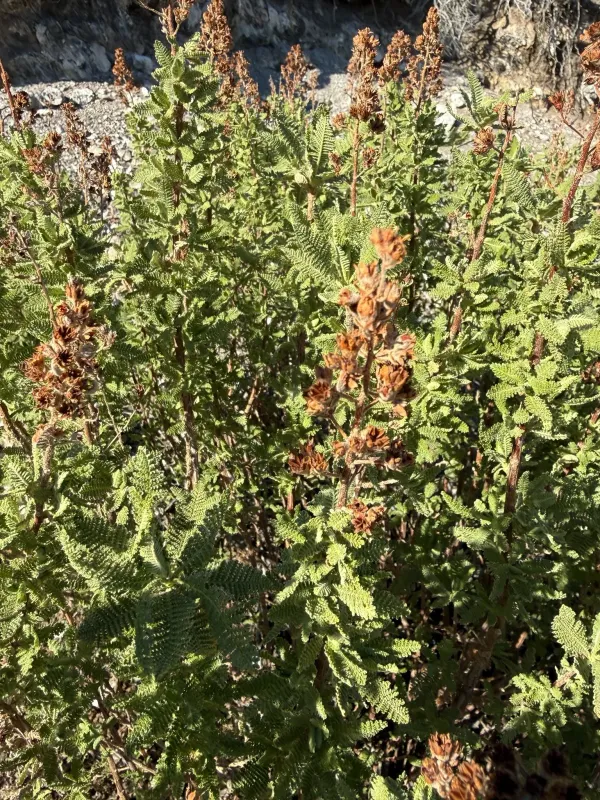
Chamaebatiaria millefolium, commonly known as Fernbush, is a deciduous shrub belonging to the Rosaceae family. It is native to the high-desert regions and rocky mountain slopes of the Western United States, which defines its rugged nature.
This shrub requires full sun exposure to thrive and produce its signature white, fragrant flowers. Planting in shaded areas leads to sparse growth, weak stems, and a significant reduction in the plant's overall vitality and aesthetic appeal.
The ideal soil for Fernbush is sandy, rocky, or gravelly with excellent drainage. It struggles in heavy clay soils or environments where moisture tends to accumulate around the crown, as this often triggers root rot and fungal infections.
Fernbush is exceptionally drought-tolerant once established, making it a perfect candidate for xeriscaping. It is adapted to survive long periods of summer heat without supplemental irrigation, provided the site conditions are suitable.
It is relatively hardy, but it performs best in regions with distinct, dry winters. In areas with high humidity and wet winters, extra care must be taken to ensure the planting site remains well-drained to protect the root system.
Harvesting
Fernbush is primarily utilized in ornamental landscaping, particularly in rock gardens, desert-themed landscapes, and as a border shrub. Its fine-textured, fern-like foliage provides a strong contrast to broad-leafed plants.
Seed harvesting should take place in late summer as the flower heads fade and the seed capsules begin to dry out. The seeds should be stored in a cool, dry place to maintain viability for future propagation.
Maintenance involves occasional pruning, usually in early spring, to remove dead wood and encourage a denser, more compact habit. Avoiding heavy pruning of older wood is recommended, as the plant does not always resprout well from mature stems.
The plant is remarkably resistant to many pests and diseases, provided that it is not overwatered. Proper spacing between individual plants is crucial to ensure adequate airflow and prevent the development of powdery mildew.
No regular fertilization is required in typical garden settings, as Fernbush is naturally adapted to nutrient-poor soils. Excessive nitrogen can cause rapid, succulent growth that is more susceptible to damage from wind and winter cold.