
Elliptic pomaderris
Pomaderris elliptica
Description
Growing requirements
The elliptic pomaderris (Pomaderris elliptica) is an evergreen shrub belonging to the Rhamnaceae family. It is native to the temperate regions of Australia and New Zealand.
This species thrives in well-drained, slightly acidic soil conditions. It is highly susceptible to waterlogged soil, which often leads to root rot if the drainage is poor.
Regarding climate, the plant prefers sunny, sheltered positions. While it can withstand mild frosts, protection is recommended in regions with colder winters to prevent branch damage.
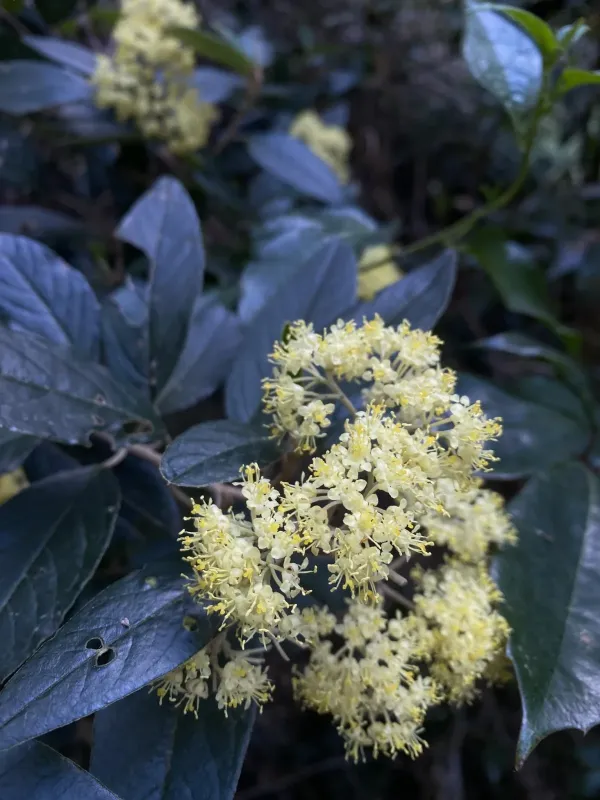
Botanically, the plant is known for its elliptic, alternate leaves covered with dense stellate hairs, which give the foliage a distinct texture and protective layer against moisture loss.
Cultivation is primarily aimed at landscaping and ornamental use. Its yellow inflorescences add high aesthetic value to gardens, making it a popular choice for native plant enthusiasts.
Main diseases and pests
Root rot is the most common threat to Pomaderris elliptica. It is typically triggered by overwatering or compacted soil that fails to shed excess moisture adequately.
Pests such as aphids and spider mites can infest the soft new growth during the spring, leading to leaf curling and general dehydration of the branches.
Fungal diseases like powdery mildew may occur in stagnant, humid environments with poor air circulation, necessitating strategic pruning to open the shrub's center.
Nutritional imbalances, often reflected as chlorosis, can weaken the plant, making it more susceptible to secondary environmental stressors and insect attacks.
Effective management includes regular monitoring of foliage health, appropriate mulch application for moisture control, and the timely use of targeted plant protection products.