
Christ's Thorn Jujube
Paliurus spina-christi
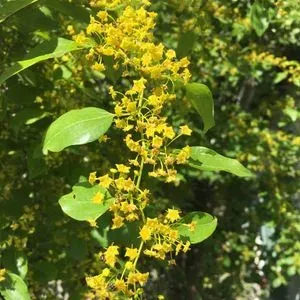
Description
Growing requirements
Paliurus spina-christi is a member of the Rhamnaceae family. This shrub is native to regions stretching from Southern Europe to Central Asia, well-known for its extreme resilience to harsh environmental conditions and poor soil quality.
The crop thrives in rocky, calcareous, and well-drained soils. It exhibits a strong intolerance to waterlogging, making proper drainage design essential in any agricultural setting to ensure healthy root development and prevent fungal colonization.
This species requires high levels of solar radiation for optimal metabolic activity and blooming. It is highly valued in agriculture for its ability to stabilize dry, eroded soils and its function as a natural, impenetrable fencing system due to its sharp thorns.
Agricultural management is minimal, focusing on annual pruning to maintain structural integrity and removing excess suckers. The plant is incredibly durable once established, requiring little to no irrigation even in extreme heat, which makes it an ideal low-input crop.
Economic value is driven by its high nectar yield, attracting significant attention from apiculturists. The plant provides a late-season honey source, which is crucial for colony sustainability in arid climates where other floral resources may be scarce.
Main diseases and pests
Paliurus spina-christi is remarkably resistant to most agricultural pests and diseases. However, in poorly ventilated sites, the plant may experience localized outbreaks of mildew, which are easily managed by thinning the canopy to improve air circulation.
Insect pests such as spider mites may appear during severe, prolonged droughts. While these rarely cause permanent damage to a mature, established plant, monitoring is recommended for younger, sensitive nurseries to ensure rapid early development.
Harvesting
Harvesting the fruits, which are distinct disk-shaped samaras, occurs in late autumn when they transition from green to a yellowish-brown color. The seeds are extracted after drying the fruits, followed by mechanical cleaning to remove debris.
For medicinal purposes, leaves and bark are harvested during the vegetative stage. Leaves are collected in mid-summer, while the bark is typically harvested during the dormant winter season or early spring to preserve the integrity of the secondary metabolites.