
Rustyback fern
Cosentinia vellea
Description
Growing requirements
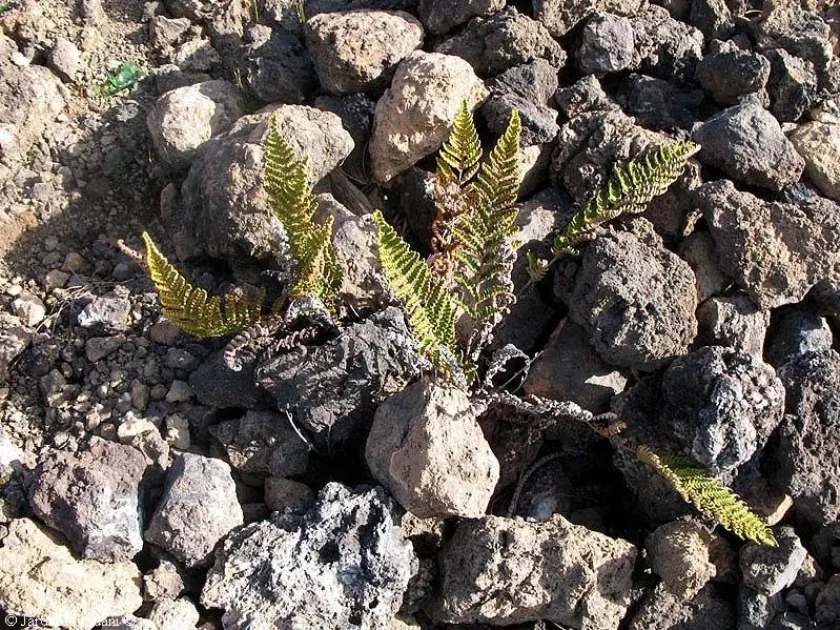
Cosentinia vellea, commonly known as the Rustyback fern, belongs to the Pteridaceae family. It is a remarkable fern species characterized by its high tolerance to aridity, distinguishing it from most moisture-loving ferns found in forest ecosystems.
The native distribution of this plant includes the Mediterranean Basin, the Canary Islands, and parts of the Middle East. It typically thrives in crags, cliffs, and rocky outcrops, where it demonstrates incredible resilience to environmental stress and limited substrate resources.
The plant features distinct fronds covered in dense, silver-gray scales. This morphological adaptation acts as a protective layer against excessive transpiration and protects the leaf tissues from high solar intensity in arid environments.
Cultivation requirements are strict regarding soil composition. A well-draining, rocky, or sandy substrate is mandatory to prevent root rot. Standard potting soil is rarely sufficient, and the addition of perlite or grit is essential to simulate its natural habitat.
In terms of climate, the species requires bright, indirect sunlight. It is not cold-hardy and should be kept in greenhouses or containers in temperate regions to protect it from freezing temperatures and high winter humidity.
Main diseases and pests
Root rot caused by fungal pathogens is the primary threat to the Rustyback fern. This typically occurs in containers where drainage is insufficient or when the soil remains waterlogged for extended periods during lower temperatures.
Pests such as spider mites are the most common issue, thriving in the dry air conditions that this fern naturally prefers. Infestations can quickly lead to desiccation of the fronds if left unmanaged.
Effective management includes maintaining a stable ventilation system around the plants. Proper air circulation helps prevent the microclimate conditions that favor both fungal development and the proliferation of insect pests.
Control strategies involve early detection through regular inspection of the fronds' undersides. If chemical treatments are necessary, they must be applied with caution to avoid damaging the delicate hairy indumentum of the foliage.
Maintaining high hygiene in the growing space is critical. Removing any dead or dying fronds promptly reduces the risk of attracting pests and serves as an important step in the general maintenance program of the culture.