
Muehlenbeckia astonii
Muehlenbeckia astonii
Description
Growing requirements
Muehlenbeckia astonii, commonly known as the shrubby tororaro, is a distinctive evergreen or semi-deciduous shrub belonging to the Polygonaceae family. It is native to the coastal regions of New Zealand, specifically endemic to the eastern parts of the South Island.
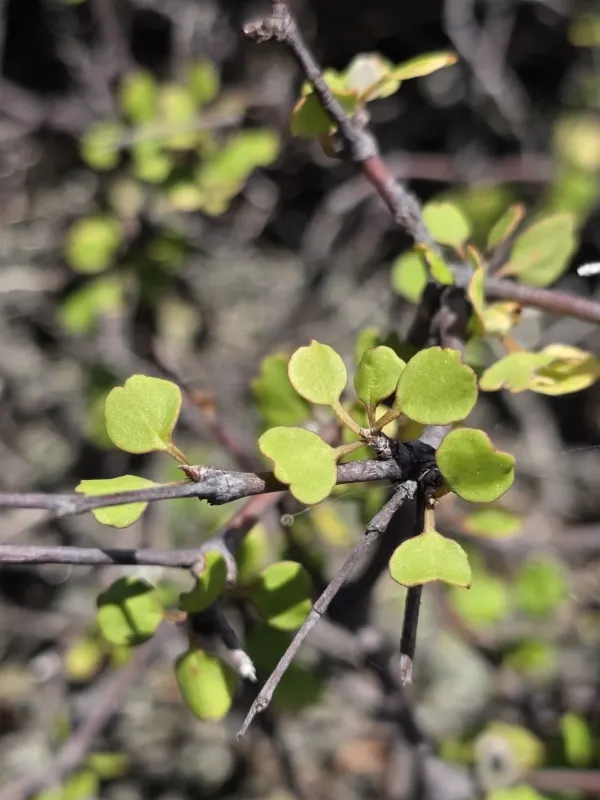
Botanically, the plant is characterized by its remarkable zig-zagging, interlaced brown branches, which create a dense and wire-like architectural framework. Its tiny, heart-shaped or rounded leaves grow in clusters along the nodes, providing a unique texture that sets it apart from traditional hedge plants.
In landscape architecture, it is highly valued for its coastal tolerance, as it withstands strong winds and salt spray with ease. This makes it a preferred choice for seaside gardens, low-maintenance landscapes, and as a structural element in modern garden compositions.
The species thrives in well-draining soils with a neutral to slightly alkaline pH. While it displays excellent drought tolerance once established, it prefers a consistent moisture regime to maintain its foliage density and overall vigor during the active growing season.
The plant performs best in full sun, which is essential to prevent the stems from becoming sparse and to maintain its compact habit. Maintenance is relatively simple, focusing primarily on occasional pruning to shape the plant or to manage its lateral spread, ensuring the structure remains dense and appealing.