
Muehlenbeckia axillaris
Muehlenbeckia axillaris
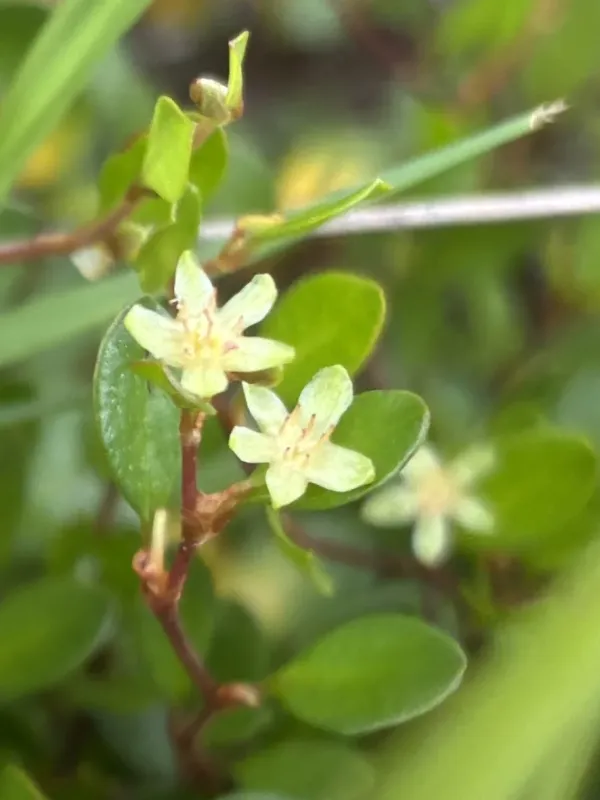
Description
Growing requirements
Muehlenbeckia axillaris, commonly known as creeping wire vine, is a prostrate perennial plant belonging to the Polygonaceae family. Originating from New Zealand and Australia, it is characterized by its wiry, interlacing stems and small, dark green leaves that form a dense, mat-like ground cover.
This species thrives in locations with full sun to partial shade. It prefers a temperate climate and is well-adapted to varied environmental conditions, making it a reliable choice for decorative landscaping in regions with mild winters.
Regarding soil requirements, Muehlenbeckia axillaris performs best in well-draining, moderately fertile soils. It is quite adaptable to different soil textures, including sand and loam, provided that waterlogging is prevented to protect the root system from decay.
The cultivation process is relatively simple, focusing on maintaining adequate soil moisture during the establishment phase. The plant spreads via creeping stems that root at the nodes, allowing it to cover ground space efficiently and outcompete many common weed species.
In terms of agricultural and horticultural use, it is highly valued for its ornamental versatility. It serves as an excellent ground cover, a filler for rock gardens, and a trailing element in hanging baskets or containers, adding structural texture to any design.
Main diseases and pests
While generally hardy, the plant may occasionally suffer from fungal issues like powdery mildew if grown in excessively humid and poorly ventilated areas. Ensuring proper spacing between plants helps to mitigate these biological risks significantly.
Pests such as aphids and spider mites can occasionally affect the foliage, particularly under stress caused by drought or improper nutrition. Monitoring for these pests and maintaining plant vigor through appropriate care practices are the primary methods of defense.