
Muehlenbeckia australis
Muehlenbeckia australis
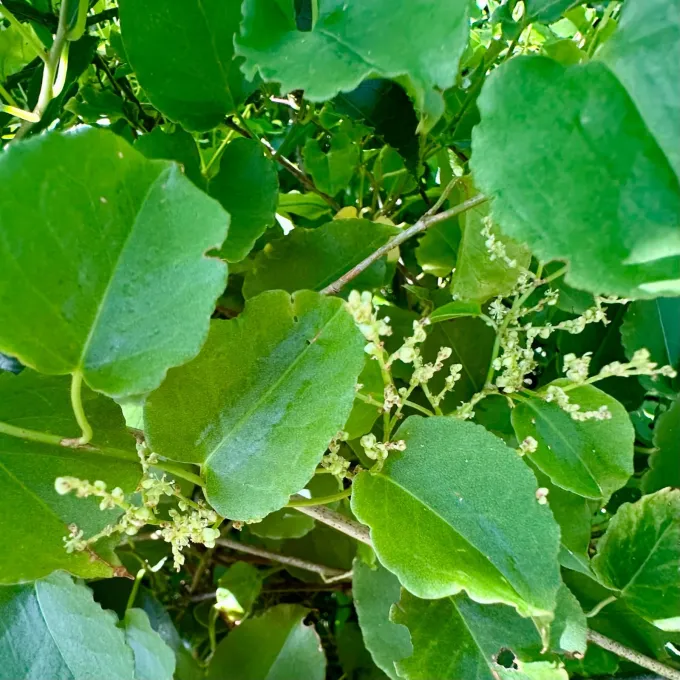
Description
Growing requirements
Muehlenbeckia australis, commonly known as the large-leaved muehlenbeckia, is a vigorous perennial climber belonging to the Polygonaceae family. It is native to New Zealand, where it naturally colonizes forest edges and disturbed land.
The plant thrives in well-drained, fertile soils with a neutral to slightly acidic pH. It prefers a position in full sun to partial shade, providing it with enough light to maintain its dense, lush foliage growth.
Cultivation practices require regular pruning to control the rapid growth of stems, which can quickly become invasive if left unattended. In colder climates, the plant needs winter protection to prevent dieback of the woody stems.
Watering requirements are moderate; while the plant is somewhat drought-tolerant once established, it prefers consistent moisture. Overwatering should be avoided to prevent root rot, especially in poorly drained soil types.
The primary economic and aesthetic use of the species is in horticulture. It is highly valued as a screening plant, a groundcover to suppress weeds, and a structural element in vertical gardens due to its ability to climb effectively.
Main diseases and pests
Pathogens affecting Muehlenbeckia australis are mostly related to high humidity and poor ventilation. Fungal diseases such as powdery mildew can be observed when the foliage remains wet for extended periods.
Common pests include aphids, scale insects, and spider mites. Monitoring during the growing season is crucial, as these insects can weaken the plant by feeding on sap, often requiring organic insecticides for control.