
Muehlenbeckia diclina
Muehlenbeckia diclina
Description
Growing requirements
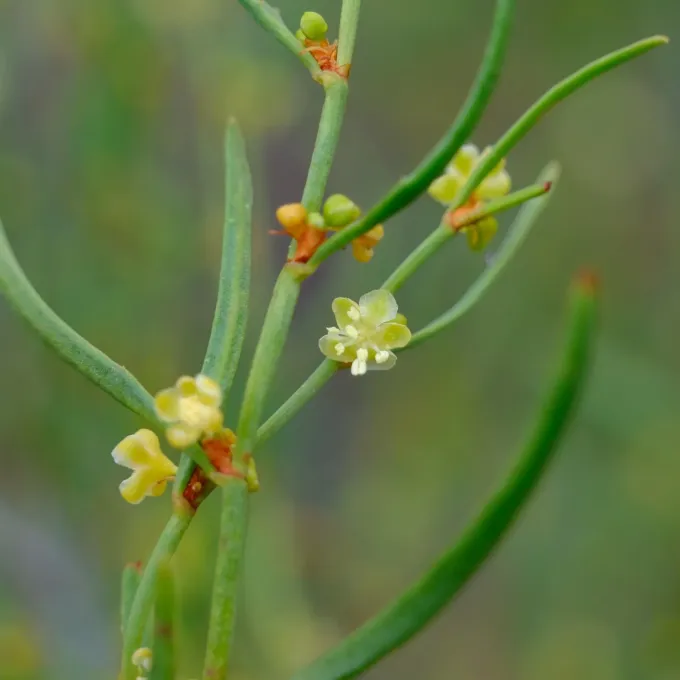
Muehlenbeckia diclina is a robust perennial subshrub or vine classified within the Polygonaceae family. It is characterized by its intricate system of wiry stems, which makes it an excellent choice for ground coverage or vertical landscaping due to its dense growth habit.
Originating from the Australian continent, this species has evolved in diverse ecological niches, allowing it to adapt well to various anthropogenic environments. Its resilience makes it a favored plant for experimental landscaping projects that require low-maintenance greenery.
To cultivate Muehlenbeckia diclina successfully, growers must ensure a well-drained substrate, as the plant is highly susceptible to root rot in waterlogged conditions. The ideal soil should be neutral to slightly acidic, providing enough organic matter to support steady growth throughout the season.
The plant thrives in bright, filtered light. While it is hardy, providing protection from intense midday heat is recommended in arid climates to prevent leaf scorching. Consistent moisture levels are essential during the establishment phase, after which the plant becomes moderately drought-tolerant.
Agronomic management involves regular pruning to maintain the desired shape and promote healthy lateral branching. Feeding with a balanced, slow-release fertilizer during the onset of spring is typically sufficient to sustain the plant's nutritional needs and encourage a vibrant appearance.
Main diseases and pests
The plant is susceptible to common garden pests such as aphids and spider mites, particularly when grown in environments with poor air circulation. Integrated pest management practices, including periodic inspection and organic insecticidal treatments, effectively mitigate these threats.
Fungal issues, primarily root rot and powdery mildew, are the most frequent health concerns for this species. These are usually avoided by strictly controlling irrigation frequency and ensuring that the planting site has adequate sunlight exposure to prevent moisture accumulation on the foliage.