
Muehlenbeckia ephedroides
Muehlenbeckia ephedroides
Description
Growing requirements
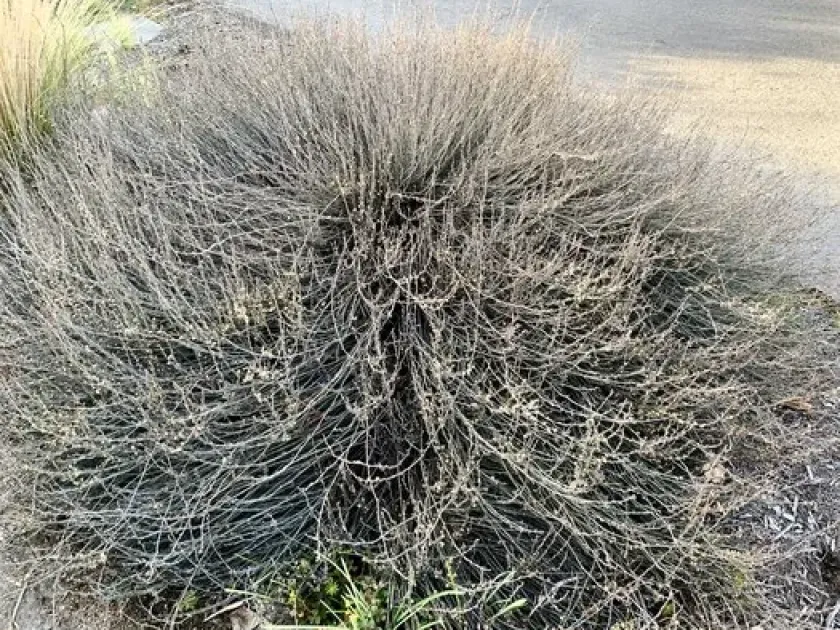
Muehlenbeckia ephedroides is a distinctive species within the Polygonaceae family. It is a perennial subshrub characterized by its wiry, leafless, ephedra-like stems that form a dense, tangled mat.
Native to New Zealand, this plant naturally thrives in harsh environments such as riverbeds, gravel plains, and rocky outcrops. These origins make it an exceptionally hardy candidate for xeriscaping and dry garden conditions.
Botanically, the plant is adapted to extreme solar exposure. Its stems are flexible and brownish-green, and the lack of traditional foliage helps minimize water loss through transpiration during long periods of drought.
The agricultural or horticultural requirements focus on perfect drainage. The soil must be gritty or sandy, as heavy clay or organic-rich soil will inevitably lead to root suffocation and eventual death of the plant.
In landscaping, this species serves as a unique ground cover or an architectural element in rockeries. It prefers full sun and is generally resilient once established, though it requires winter protection in colder climates to prevent stem damage.
Main diseases and pests
The primary threats to Muehlenbeckia ephedroides involve root rot and fungal pathogens. These are almost always caused by improper irrigation, specifically keeping the soil constantly moist rather than allowing it to dry out between waterings.
Pest pressure mainly comes from sap-sucking insects like aphids and spider mites. Due to the complex, dense structure of the plant, these pests can thrive unnoticed in the interior of the shrub until the infestation becomes significant.
Preventive maintenance involves ensuring high air permeability and avoiding dense planting patterns. Good ventilation helps keep the stems dry and reduces the habitat suitability for common pests.
If chemical intervention is required, systemic insecticides applied during the early stages of an infestation are most effective. Care must be taken to ensure thorough coverage due to the intricate growth pattern of the branches.
Overall, maintaining the plant's health relies on replicating its natural environment: lean, well-draining soil and plenty of sunlight, which reduces the plant's susceptibility to opportunistic pathogens.