
Woolly cupgrass
Eriochloa villosa
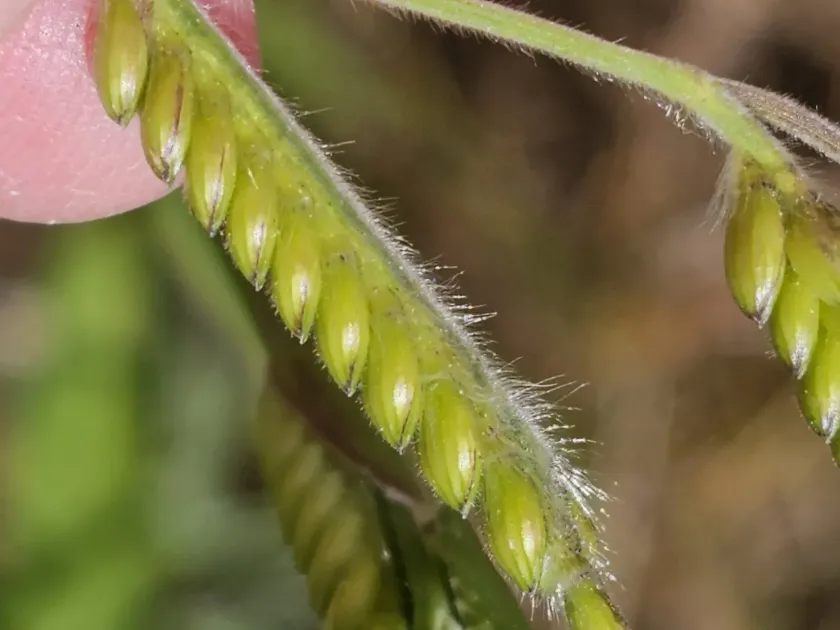
Description
Sowing dates
Woolly cupgrass is a warm-season annual grass that requires soil temperatures to rise above +12°C for effective germination. In most temperate regions, emergence typically begins in late spring.
The seeds of Eriochloa villosa exhibit a staggered germination pattern. This biological adaptation allows the weed to emerge continuously throughout the growing season, complicating chemical control strategies.
Seed bank longevity is a significant concern, as seeds can remain viable in the soil for several years. Disturbing the soil often triggers new flushes of germination, which is a major challenge for farmers.
Rapid early-season growth allows woolly cupgrass to compete aggressively with row crops like corn or soybeans. If left uncontrolled, it can quickly dominate the field space.
Farmers must monitor fields closely after primary tillage, as the soil disturbance provides the necessary conditions for the weed seeds to break dormancy and sprout rapidly.
Growing requirements
This species thrives in fertile, well-drained loamy soils but shows remarkable adaptability to various soil types. It is particularly competitive in fields with high organic matter content.
Woolly cupgrass is highly responsive to light. While it prefers full sun, its rapid growth rate allows it to persist even in partially shaded environments, making it a difficult weed to suppress through crop canopy alone.
Optimal development occurs in warm, humid conditions with temperatures ranging from +20°C to +30°C. It is extremely sensitive to frost, which limits its presence to growing seasons with sufficient heat units.
Adequate soil moisture is critical during the tillering and jointing stages. High rainfall events during the summer often lead to explosive growth and increased biomass production of the weed.
Effective management requires ensuring that crop plants achieve rapid canopy closure, which restricts the amount of solar radiation available to the weed seedlings during the early stages of their growth.
Main diseases and pests
Eriochloa villosa is a notorious competitor for nitrogen and water. By consuming these essential resources, it can significantly reduce the yield potential of the primary crop if not managed early.
The plant acts as an alternative host for several cereal diseases, including various types of rust and smuts. This role as a reservoir for pathogens can lead to increased infection rates in adjacent field crops.
Pests such as aphids and cereal flies frequently use woolly cupgrass as a nursery during the season. This provides them with a stable environment to build populations before moving to cash crops.
Herbicide resistance is a developing issue with woolly cupgrass. The use of multiple modes of action and rotating chemical programs is essential to prevent the selection of resistant biotypes.
Mechanical cultivation remains an important tool, but it must be performed precisely. If the roots are not completely severed, the plant can show a degree of regeneration, particularly under moist conditions.
Harvesting
The late-maturing nature of woolly cupgrass often causes it to remain green during the harvest of grain crops. This results in significant operational challenges during the harvesting process.
Increased moisture content in the harvested grain is a direct consequence of woolly cupgrass contamination. This requires expensive drying processes to bring the grain to a safe storage level.
Seed dispersal during the harvest process is one of the most significant factors in the weed's spread. If the weed is allowed to seed before harvest, it guarantees future infestation levels for years to come.
Post-harvest tillage can help manage the seed bank by burying some seeds deeper and encouraging others to germinate so they can be destroyed by winter temperatures or secondary tillage.
Proper cleaning of machinery and equipment after harvesting infested fields is necessary to prevent the transport of seeds to clean areas, as woolly cupgrass is highly invasive in agricultural settings.