
Woollybutt grass
Eragrostis eriopoda
Description
Growing requirements
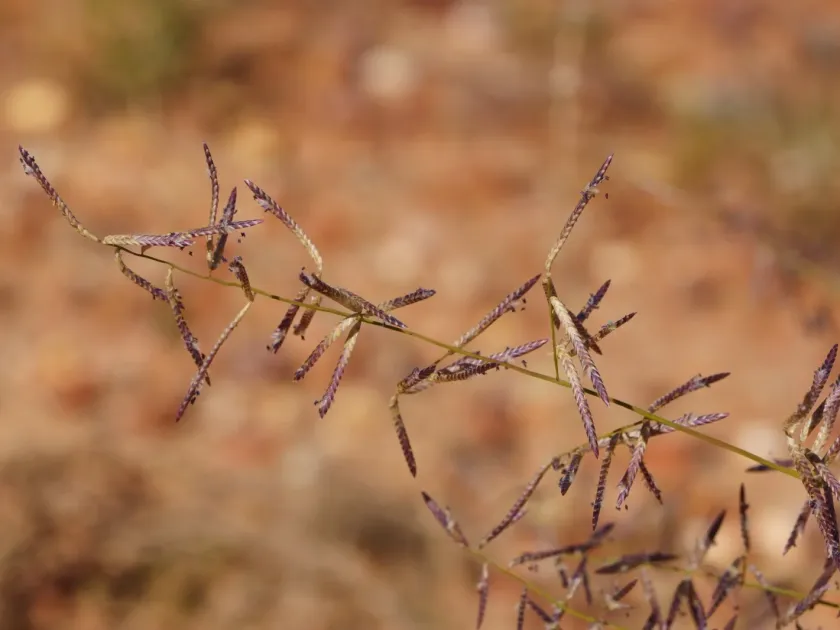
Woollybutt grass (Eragrostis eriopoda) is a perennial grass species belonging to the Poaceae family. Native to the arid and semi-arid regions of Australia, this plant is well-adapted to harsh environmental conditions and low-nutrient soils.
The plant is scientifically recognized for its distinct morphological features, specifically the dense, woolly-like hairs at the base of its stems. This adaptation serves as a mechanism to minimize water loss and protect the plant's basal buds from extreme heat.
Regarding climate requirements, the species thrives in high-temperature environments with irregular rainfall patterns. It acts as a keystone species in sandy soil habitats, where it provides structural integrity to the soil profile and prevents sand drift.
Soil management for this culture is minimal as it is highly tolerant to nutrient-poor, sandy substrates. However, it requires well-drained conditions, as it is highly susceptible to root damage in waterlogged or heavy clay environments where aeration is insufficient.
From an agricultural standpoint, it serves as a valuable forage plant for livestock in arid range lands. While it remains a durable grazing grass, its nutritional value is highest when the plant is actively growing; mature leaves are relatively lignified and provide lower energy content.