
Ochlandra scriptoria
Ochlandra scriptoria
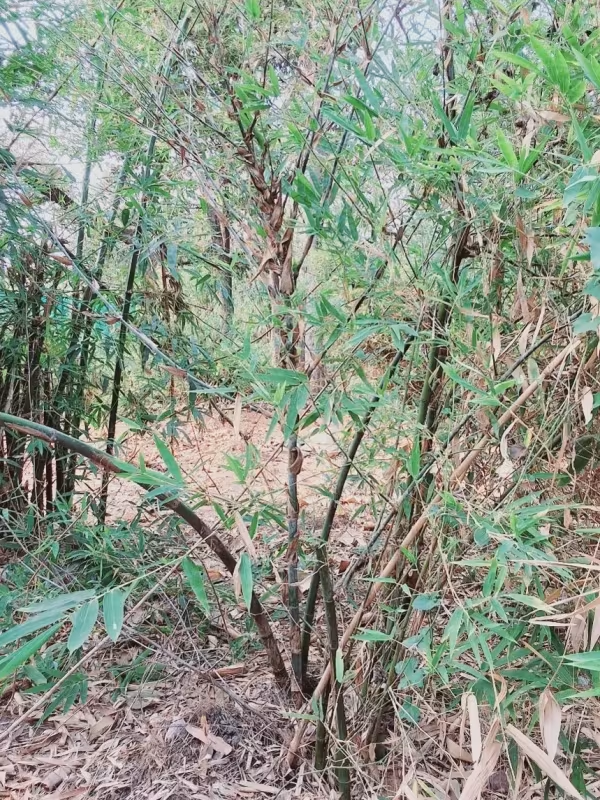
Description
Growing requirements
Ochlandra scriptoria is a species of bamboo in the Poaceae family. It is a perennial, evergreen grass that naturally thrives in the humid, tropical environments of southwestern India, particularly in the Kerala region.
This plant is typically found growing along riverbanks and in swampy areas where water is abundant. It prefers high-moisture environments and cannot tolerate prolonged drought conditions, which makes site selection crucial for successful growth.
The ideal soil profile for this bamboo consists of fertile, well-draining alluvial or loamy soils. Rich in organic matter, these soils provide the necessary nutrients for the rapid development of the plant's characteristic slender culms.
Climatically, Ochlandra scriptoria requires a tropical environment with high humidity and significant annual rainfall. It is sensitive to frost and extreme cold, restricting its agricultural cultivation to frost-free regions.
The plant exhibits a clump-forming habit, expanding through underground rhizomes. This growth strategy allows it to form dense, protective stands that are effective at stabilizing soil and preventing erosion along watercourses.
Yield
Historically, Ochlandra scriptoria is renowned for its use in creating writing implements, as indicated by its specific epithet. The slender, hollow stems were traditionally fashioned into styli for writing on palm-leaf manuscripts.
Today, the culms are primarily used in the cottage industry for weaving baskets, mats, and other decorative items. Its flexibility and durability make it a highly valued natural material for traditional handicrafts.
Beyond traditional crafts, the plant serves as a biomass resource for the paper and pulp industry. Its fibrous structure is processed to produce various types of paper, contributing to a sustainable supply of raw material.
The environmental utility of the species is significant in land management. By establishing dense root networks, Ochlandra scriptoria plays a vital role in watershed management and the conservation of riparian zones.
Sustainable harvest practices involve thinning the stands periodically. This method ensures continuous productivity while maintaining the overall health and vigor of the bamboo plantation for many harvest cycles.
Main diseases and pests
The primary threats to Ochlandra scriptoria plantations include fungal infections, which flourish in the humid and shaded conditions of dense bamboo groves. These pathogens can weaken the culm structure and lower its economic value.
Insect pests that target tender shoots and nodes are another common concern. Infestations can hinder the vertical growth of young culms, causing significant yield losses in commercial production zones.
Effective management strategies emphasize sanitation, including the regular removal of dead or diseased stems to improve airflow and reduce pest habitats. Proactive monitoring is essential to prevent localized outbreaks from spreading.
Weed competition can be particularly detrimental during the establishment phase of the plantation. Regular mechanical weeding is required until the bamboo stands are dense enough to naturally suppress competing vegetation.
Given the proximity of these plantations to water sources, integrated pest management (IPM) techniques are preferred over broad-spectrum chemical treatments to preserve water quality and local biodiversity.