
Helictotrichon convolutum
Helictotrichon convolutum
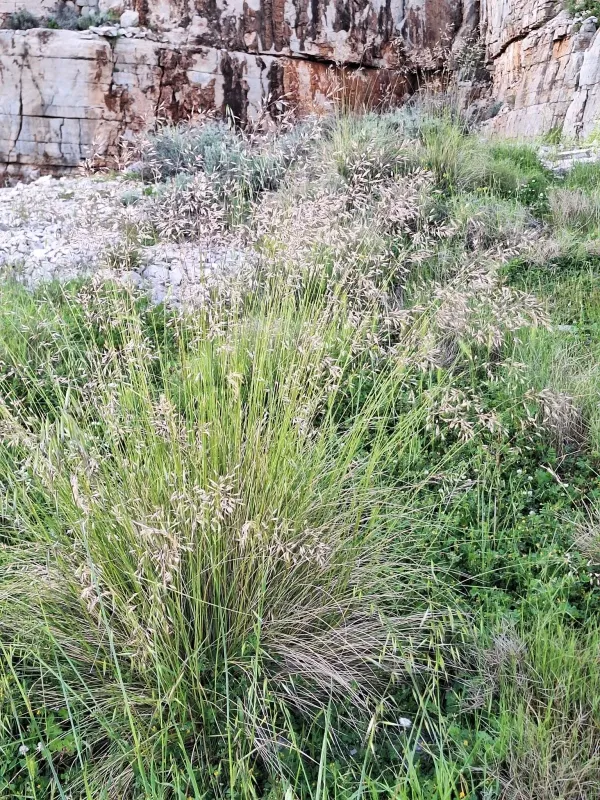
Description
Sowing dates
Sowing should ideally take place in early spring when soil moisture is sufficient to support germination. Providing a fine, firm seedbed increases the rate of success and ensures uniform stand density across the field.
Growing requirements
Helictotrichon convolutum is a perennial herbaceous plant belonging to the Poaceae family. Known for its resilience, this species is well-adapted to steppe and meadow-steppe environments, characterized by harsh climates and varying soil conditions.
Botanically, it is defined by its dense, tufted growth habit and narrow, convolute leaves. This structure is a physiological adaptation that reduces surface area, thereby helping the plant to survive effectively during dry, hot periods common in its native range.
In terms of agricultural requirements, this plant is remarkably hardy. It thrives in well-drained, nutrient-moderate soils, including rocky or stony substrates where less resilient species struggle. It exhibits excellent winter hardiness, making it a reliable crop for colder regions.
Agricultural management of this species focuses on its role in permanent pasture improvement. Its deep root system helps in soil stabilization and ensures survival through drought, providing consistent forage production when other grasses may become dormant.
The nutritional value of Helictotrichon convolutum makes it a preferred component in livestock feed mixtures. It provides essential protein and fiber, especially when harvested at the appropriate vegetative stage before lignification occurs in the stems.
Harvesting
Harvesting for forage should be conducted during the early heading stage to maintain a high leaf-to-stem ratio. Proper timing is critical to ensure the hay is palatable and remains rich in essential minerals for livestock consumption.