
Leersia sayanuka
Leersia sayanuka
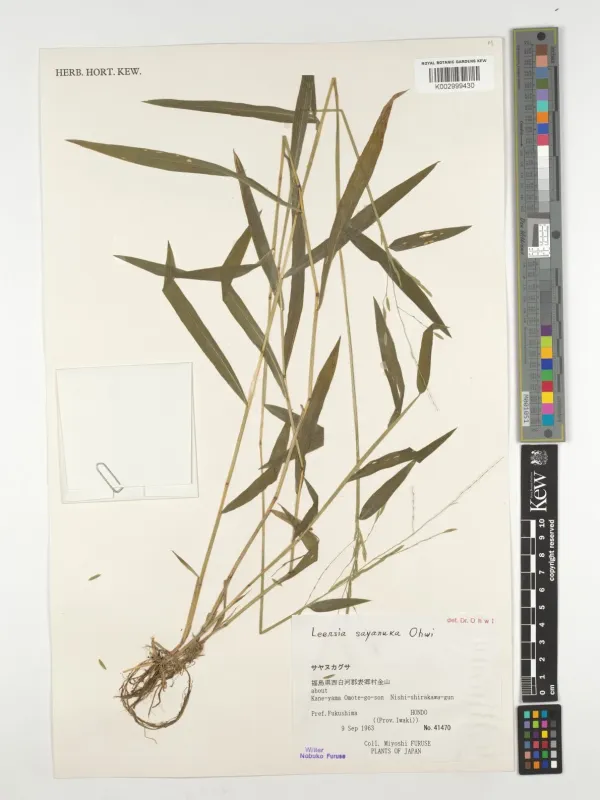
Description
Sowing dates
Leersia sayanuka is a perennial grass species often utilized as a forage crop, appreciated for its robust growth and ability to thrive in moist environments.
The sowing process begins in early spring, once the soil temperatures are consistently above 15 degrees Celsius to ensure rapid and uniform seed germination.
For best results, seeds should be sown at a shallow depth of approximately 1 to 2 centimeters to provide sufficient warmth and access to surface moisture.
Seedbed preparation requires thorough tilling to break up clods and create a fine texture that promotes maximum contact between the soil and the seed.
Rolling the field post-sowing is highly recommended as it improves soil structure, aids in moisture retention, and secures the seeds against wind erosion.
Growing requirements
Belonging to the Poaceae family, Leersia sayanuka is naturally adapted to wetland and riparian zones, demanding soils with excellent water-holding capacity.
The ideal soil type is a rich loamy or alluvial soil that remains damp throughout the growing season without becoming chronically waterlogged.
While the plant is moisture-loving, it requires a balanced nutrient profile, including adequate nitrogen and potassium, to support its rapid biomass production.
Sunshine is a critical factor for development; therefore, fields should be situated in open locations to ensure the grass receives full exposure to sunlight.
The plant demonstrates a high tolerance for varying pH levels but thrives best in slightly acidic to neutral soil conditions, typically ranging from 6.0 to 7.0.
Yield
Yield efficiency is significantly enhanced by nitrogen supplementation, which encourages lush green leaf development after every harvesting cycle.
Under optimal irrigation and fertilization management, the crop can support multiple harvests per year, making it a highly productive option for farmers.
Nutritional value peaks during the late vegetative phase, just before the plant shifts its energy towards flower and seed head production.
Effective stand management, including the prevention of overgrazing or excessive trampling, ensures the longevity of the crop for several growing seasons.
Producers should monitor biomass density and adjust irrigation frequency to maintain consistent growth rates, even during periods of short-term drought.
Main diseases and pests
Fungal pathogens such as leaf rusts and mildews pose the most significant risk to crop health, especially in conditions characterized by high humidity.
Insect pests including aphids and various grass-feeding larvae can cause damage to new shoots, potentially hindering the overall growth rate of the plantation.
Integrated pest management strategies, such as crop rotation and the use of resistant varieties, are essential for mitigating these biological threats.
Maintaining adequate space between plants helps improve air circulation, effectively reducing the likelihood of fungal outbreaks in dense stands.
- Regular scouting for signs of discoloration or pest damage
- Proactive drainage management to avoid root rot
- Appropriate use of fungicides when infection thresholds are reached
Harvesting
The optimal harvest window is determined by the crop's developmental stage, targeting the period before the stems become overly fibrous and lignified.
Mechanical harvesting equipment should be set to leave a sufficient stubble height, which protects the basal nodes and promotes faster regrowth.
Rapid processing post-harvest is crucial to preserve the nutrient content, particularly for silage production where moisture management is paramount.
Storing the harvested material in cool, dry conditions prevents spoilage and maintains the palatability of the forage for livestock consumption.
Final cutting before winter dormancy should be planned carefully to allow the root system to store sufficient energy for healthy regrowth in the spring.