
Lemmon's alkali grass
Puccinellia lemmoni
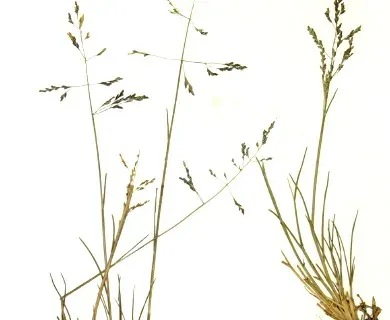
Description
Growing requirements
Lemmon's alkali grass (Puccinellia lemmoni) is a hardy perennial grass belonging to the Poaceae family. This species is highly valued in agriculture for its exceptional tolerance to saline and alkaline soil conditions that inhibit the growth of most conventional forage crops.
The native range of this plant is primarily in the western regions of North America, where it thrives in moist salt flats, alkaline meadows, and low-lying areas with high water tables. It is an evolutionary master of survival in extreme soil chemistry environments.
Botanically, it is a bunchgrass characterized by slender leaves and a spreading panicle. Its root system is finely branched, which provides excellent soil stabilization properties, making it an ideal candidate for erosion control in saline areas.
Climatic requirements involve access to adequate moisture, particularly during the growing season. While the species is adapted to semi-arid regions, it performs best when there is sufficient moisture to prevent excessive salt concentration in the upper soil profile.
Agricultural use of Puccinellia lemmoni is primarily directed toward forage production on degraded soils. It provides high-quality grazing material and serves as a vital component in the reclamation of salinized lands, contributing to environmental restoration.
Main diseases and pests
The primary threats to Lemmon's alkali grass are associated with drastic alterations in soil moisture levels. Prolonged periods of drought combined with extreme heat can stress the stand, although the species is generally resilient compared to other grasses.
Pests such as grasshoppers and aphids can occasionally damage the vegetative biomass. However, because the plant typically grows in harsh conditions, insect populations are often naturally limited by the lack of other suitable host plants in the area.
Fungal diseases, such as leaf spot or rust, can develop if the stand becomes too dense or if there is excessive humidity near the soil surface. Management practices such as periodic grazing help to maintain plant health by encouraging air circulation.
Weed competition is a significant concern during the establishment phase. Once the grass is fully established, it forms a dense root mat that is very effective at preventing the intrusion of invasive weed species in alkaline environments.
Mitigation of these threats relies on sound pasture management. Avoiding overgrazing is crucial to keep the root system intact and to ensure that the grass retains the vigor necessary to recover from occasional pest outbreaks or adverse weather events.