
Cymbopogon commutatus
Cymbopogon commutatus
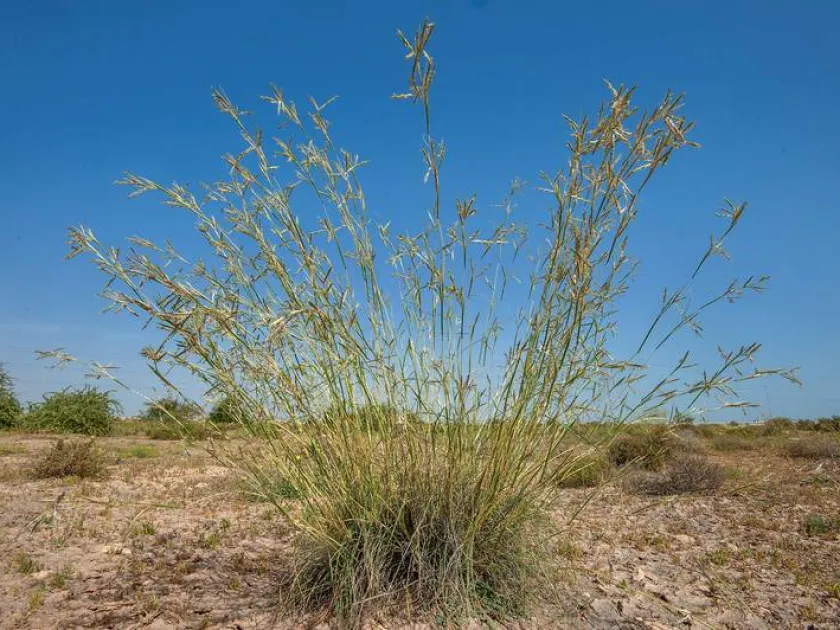
Description
Sowing dates
Cymbopogon commutatus is a robust perennial grass species typically propagated by seeds or division. Successful establishment requires a well-prepared seedbed with fine soil structure, as the seeds are relatively small and sensitive to deep burial.
The optimal sowing time occurs in late spring when soil temperatures consistently reach 20–25 degrees Celsius. Ensuring uniform moisture levels during the germination phase is critical for achieving a high percentage of emergence across the field.
When starting from seed in a nursery, trays should be kept in a sunny location to prevent leggy growth. Transplanting the seedlings into the main field happens once the plants have developed a strong root system and all risk of frost has completely passed.
Spacing is a vital consideration for this crop due to its tendency to form large, dense clumps over time. Maintaining a planting distance of at least 50 cm between rows and 40 cm between individual plants promotes better air circulation and growth.
Direct seeding in the field requires careful weed management during the first few weeks. As the seedlings are initially slow to establish, preventing competition from faster-growing weeds is essential for securing the crop's long-term health and productivity.
Growing requirements
As a member of the Poaceae family, Cymbopogon commutatus thrives in warm, tropical, or subtropical environments. It is naturally adapted to high light intensity and can withstand extended periods of dry conditions without significant stress.
Soil requirements focus on excellent drainage and moderate fertility. The plant performs exceptionally well in sandy loam soils, which prevent waterlogging—a condition that can quickly lead to root rot and other moisture-related pathogens.
Temperature plays a major role in the synthesis of volatile compounds within the grass. While it can survive lower temperatures, active growth and the development of high-quality essential oils are achieved primarily in warm weather above 22 degrees Celsius.
Fertilization should be managed carefully to balance biomass production with oil quality. High nitrogen levels can boost vegetative growth, but excessive amounts may dilute the concentration of secondary metabolites, so balanced NPK formulas are generally preferred.
The field must be located in an open area with full exposure to sunlight. Shaded conditions not only reduce the overall yield of the green mass but also significantly decrease the aromatic potential of the crop, making it unsuitable for high-quality oil production.
Main diseases and pests
The primary threats to Cymbopogon commutatus include fungal infections caused by high humidity or poor ventilation within the dense clumps. Rust and leaf spot diseases are common concerns, especially in regions with frequent rainfall or heavy morning dews.
Pests like aphids, mites, and grasshoppers can cause mechanical damage to the foliage. If left unchecked, these insects weaken the plant's structural integrity and can introduce secondary pathogens that further degrade the aromatic components of the leaves.
Cultural practices such as removing dead plant debris and ensuring proper row spacing are the first line of defense. By improving airflow around the plants, growers can significantly reduce the risk of mold and fungal spread in the field.
If chemical interventions are necessary, they must be chosen with caution to preserve the organic integrity of the harvested material. Many producers opt for biological control methods, such as beneficial insects or botanical extracts, to mitigate pest pressure.
Rotation cycles are essential to prevent the buildup of soil-borne pathogens. Following a strict crop rotation schedule, avoiding consecutive plantings of the same grass species, is a fundamental agronomic step for maintaining long-term soil health.
Harvesting
The harvest strategy for Cymbopogon commutatus is focused on maximizing the concentration of aromatic compounds. Harvesting is typically timed just before the plant enters its full flowering stage, which is when essential oil levels are at their peak.
Using sharp, mechanized sickle-bar mowers ensures a clean cut, which prevents unnecessary bruising of the stems. Bruised tissue can start to ferment prematurely, leading to the rapid loss of volatile oils before they can be extracted during processing.
Efficiency in harvesting is crucial; the cut material should be moved to the distillation facility as quickly as possible. Prolonged exposure to high temperatures or direct sunlight after cutting can cause significant losses of the desired essential oil fractions.
If immediate processing is not possible, the biomass must be stored in a cool, shaded, and well-ventilated area. Avoid stacking the cut grass too deeply, as this causes the pile to heat up, triggering unwanted degradation of the chemical compounds.
After each harvest, it is beneficial to apply a balanced fertilizer and perform light cultivation of the soil. This encourages the plant to regenerate rapidly, setting the stage for the next harvest cycle within the same growing season.