
Gamba grass
Andropogon gayanus Kunth
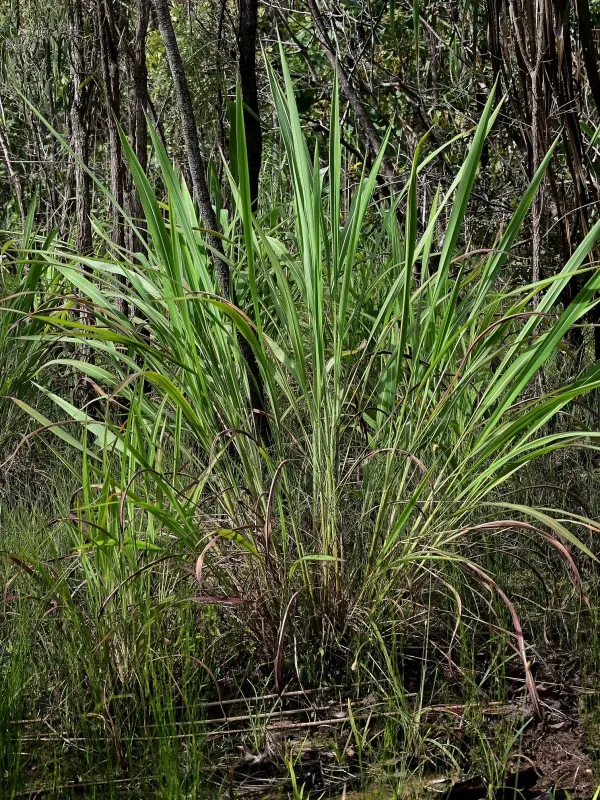
Description
Sowing dates
Sowing of Gamba grass is typically conducted at the beginning of the rainy season when soil moisture is sufficient for seed germination. In tropical regions, this is a critical factor as seeds require stable humidity during the initial weeks of development.
The optimal planting depth for seeds ranges from 1 to 2 centimeters. Sowing too deep significantly reduces the germination rate due to the physiological characteristics of these small grass seeds.
Seeding rates vary based on the planting method, whether using seeds or transplants. For mechanized sowing, it usually requires between 3 and 5 kg of pure seed material per hectare.
To improve germination, seeds often undergo pre-treatment, including the removal of fluff or the use of specialized drills capable of handling lightweight, hairy grass seeds.
The crop exhibits high self-seeding capability, so in established pastures, maintaining a proper grazing regime is often sufficient to ensure the renewal of the grass stand.
Growing requirements
Gamba grass (Andropogon gayanus) belongs to the Poaceae family and is a perennial tropical grass native to Africa. It is highly valued for its ability to thrive on poor soils where other forage species show low productivity.
The plant demonstrates exceptional resilience to prolonged drought periods. This quality makes it an indispensable component of the feed base in regions with a distinct dry season.
The crop prefers well-drained soils, including sandy and loamy substrates. It does not tolerate waterlogging or flooding, so selecting a site with good drainage is an essential requirement.
This grass is heliophilic and sensitive to shading. Under conditions of high solar radiation, Gamba grass develops a powerful root system that penetrates to a significant depth, ensuring survival in extreme conditions.
The optimal temperature range for active vegetative growth is between 25 and 35 degrees Celsius. Development slows down significantly at temperatures below 15 degrees.
Yield
The green mass yield of Gamba grass under favorable conditions can reach 15–25 tons per hectare per season. Yield indicators heavily depend on soil fertility levels and precipitation patterns.
Feed quality remains high if a regular mowing or grazing cycle is maintained. In the pre-flowering stage, the protein content in dry matter is approximately 8–12 percent.
The crop is well-suited for hay production. When harvested at the right time, it provides good quality hay that is readily consumed by cattle and sheep.
A significant advantage is the longevity of the stand. With proper management, a single planting can be productively used for over 10 years without the need for replanting.
Productivity is directly correlated with nitrogen fertilizer application, although Gamba grass is considered less demanding regarding mineral nutrition compared to high-intensity pasture grasses.
Main diseases and pests
Gamba grass is relatively resistant to most common grass diseases. However, in conditions of high humidity, it can be susceptible to fungal leaf diseases such as rust.
Pests affecting the crop include various species of aphids and leaf beetles. In some regions, larvae of soil-dwelling insects can cause significant damage by attacking the root systems of young plants.
The primary threat to productivity is an improper grazing regime. Excessive grazing pressure leads to the depletion of carbohydrate reserves in the roots and the gradual displacement of the crop by weeds.
Weed control is important only during the first year of the crop's life. In subsequent years, the dense sod of Gamba grass effectively suppresses most weed species.
Pest control usually does not require the use of pesticides. The main method of protection remains maintaining high standards of agronomic practices and rational pasture rotation schedules.
Harvesting
Harvesting for hay is conducted at the boot stage or at the onset of heading. This period is characterized by the optimal balance between nutritional value and the volume of biomass obtained.
When used as a pasture crop, it is important to prevent the grass from becoming overgrown. Old biomass becomes coarse and loses digestibility, which reduces livestock productivity.
After mowing, Gamba grass regrows rapidly, allowing for 3–4 cuts per growing season, provided there is sufficient moisture or irrigation.
The hay requires thorough drying because the stems are quite coarse and thick. Slow drying can lead to mold formation inside bales or haystacks.
For seed production, harvesting is performed when the seeds reach full maturity. Given the seed's tendency to shatter, it is important to perform threshing in a timely manner, focusing on the color of the inflorescences.