
Big bluestem
Andropogon gerardii Vitman
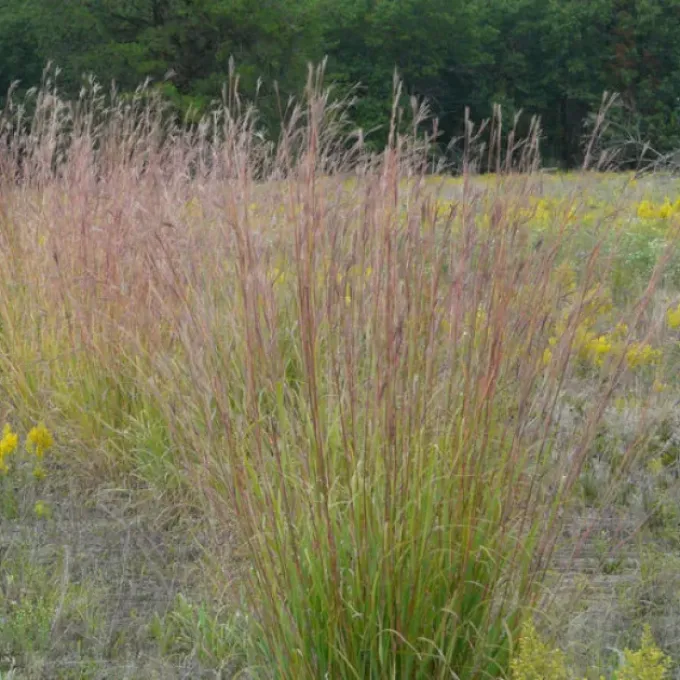
Description
Sowing dates
Big bluestem (Andropogon gerardii) is a dominant perennial grass species native to the North American tallgrass prairies. Sowing is typically performed in late spring when soil temperatures reach optimal levels, as this grass is a warm-season species that requires significant warmth for germination.
Seedbed preparation requires a well-tilled, weed-free environment to ensure proper seed-to-soil contact. Since seeds may have a degree of dormancy, stratification or the use of pre-chilled seeds is often recommended to improve the uniformity of emergence in the field.
Drilling the seed at a shallow depth is the preferred method for establishment. Maintaining proper row spacing, usually around 20 to 30 centimeters, allows the plants to establish a robust root system, which is critical for their long-term survival and vigor.
Seedlings develop slowly during the initial stages, making them vulnerable to competition from invasive weeds. Effective weed control during the first growing season is essential; otherwise, the grass may be suppressed by faster-growing annuals or weeds.
Once established, big bluestem demonstrates excellent seedling vigor and competitive ability. Strategic timing of the planting ensures the grass can take advantage of the full summer growing season to develop deep roots before the onset of the first winter frosts.
Growing requirements
This grass thrives in deep, fertile, and well-drained soils, although it exhibits remarkable adaptability to a range of soil types. It can tolerate mildly acidic or alkaline conditions, making it a versatile choice for various agricultural landscapes.
One of its primary strengths is its exceptional drought tolerance. The species develops a deep, extensive root system that can reach moisture stored in lower soil profiles, allowing it to remain green and productive during peak summer heat and dry spells.
As a C4 photosynthetic plant, big bluestem is highly efficient at converting solar energy into biomass during hot, sunny conditions. It flourishes in full sun and is highly responsive to nitrogen fertilization during the peak vegetative growth period.
Waterlogging and poorly drained heavy clays are generally unfavorable for this species. Prolonged soil saturation can lead to root suffocation and increased susceptibility to fungal issues, thus proper field drainage is a key management priority.
Big bluestem is cold-hardy and well-adapted to regional winters. The plant enters a dormant state after the first killing frost and resumes growth in the spring, which ensures its persistence as a perennial crop for many years in suitable climates.
Yield
The yield potential of big bluestem is substantial when managed under proper fertility and moisture regimes. It is widely recognized for its high palatability and nutritional value for livestock, particularly during the early summer grazing stages.
In addition to grazing, this grass is highly valued for hay production. If harvested at the correct stage, it provides a high-quality forage rich in protein. Multiple harvests per season are possible with good irrigation and nitrogen application.
Management of the harvest cycle is critical to ensure stand longevity. Farmers typically allow the grass to rest between grazing or cutting periods, which enables the plant to replenish its carbohydrate reserves in the root system for future regrowth.
When used for hay, harvesting before seed head emergence is crucial. Cutting at this stage balances the need for biomass quantity with forage quality, as fiber content increases rapidly once the reproductive stage begins.
Big bluestem also contributes to soil health and conservation efforts. Its root structure adds significant organic matter to the soil profile over time, improving structural stability and reducing erosion in vulnerable agricultural fields.
Main diseases and pests
Big bluestem is generally robust and resilient to most common diseases affecting pasture grasses. However, in overly dense stands with poor airflow, minor incidents of foliar diseases like rust may occur, particularly during seasons with high humidity.
Insect pests rarely reach damaging thresholds that require chemical intervention. Some grass-feeding insects might be present, but the species' natural vigor and healthy state usually keep population levels of such pests under effective control.
The greatest threat during the establishment phase is weed encroachment. Without integrated weed management, competitive vegetation can choke out new plantings, resulting in reduced stand density and long-term productivity losses.
Prevention of stand degradation is achieved through balanced grazing and periodic rest. Maintaining an appropriate height helps the grass shade out opportunistic weeds and prevents the creation of micro-climates that favor fungal growth.
The species' inherent resilience makes it a low-input crop. Farmers can often minimize the use of pesticides and synthetic inputs, which aligns with modern sustainable agricultural practices and reduces overall operating costs.
Harvesting
Successful harvest timing is the key to maintaining forage quality. Using mower-conditioners is highly effective, as the process crumbles the stems, allowing for faster moisture loss and quicker field curing of the hay.
The cutting height must be carefully regulated; leaving at least 10–15 centimeters of stubble is recommended. This practice preserves essential photosynthetic leaf area and energy storage organs, ensuring the plant recovers quickly after the harvest.
Haylage production is an excellent alternative to dry hay, especially in regions with unpredictable summer rainfall. This method captures the nutrients of the crop and prevents degradation from weather-related factors during the drying process.
Regrowth management following the primary harvest is vital. The grass needs sufficient time to recover before the next harvest cycle to avoid depleting the plant's resources, which is especially important toward the end of the growing season.
Seed harvesting is another agricultural application. Because big bluestem seeds can be fluffy and lightweight, specialized harvest equipment is often required to collect and clean the seeds effectively while minimizing losses during the process.