
Ceratocapnos heterocarpa
Ceratocapnos heterocarpa
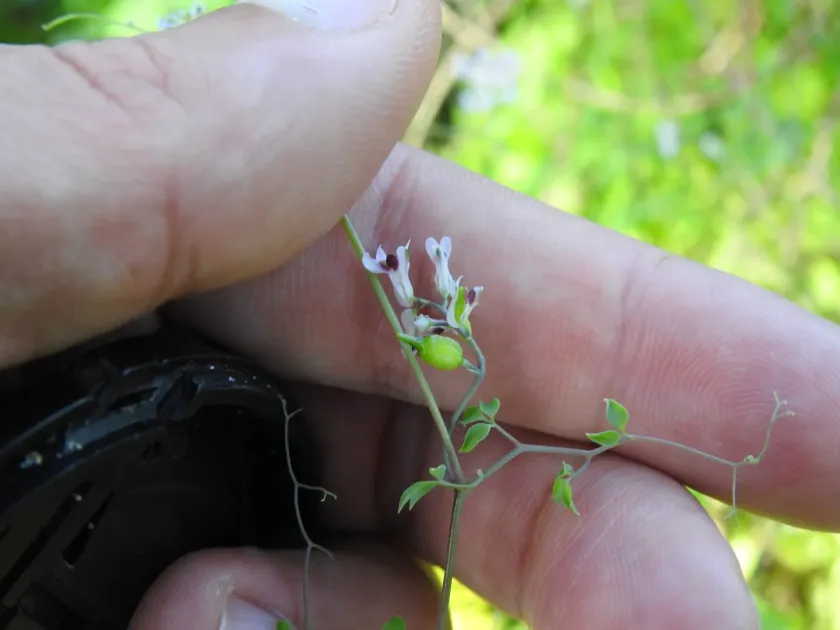
Description
Growing requirements
Ceratocapnos heterocarpa is an annual herbaceous plant belonging to the Poppy family (Papaveraceae). It is distinguished by its unique heterocarpic fruit development, which allows the plant to adapt to various environmental niches through different seed dispersal strategies.
The native range of this species encompasses the Mediterranean Basin, specifically parts of the Iberian Peninsula and North Africa. It typically colonizes rocky outcrops, scree slopes, and disturbed soils, reflecting its evolution in specialized, nutrient-limited environments.
For successful agricultural establishment, the plant requires well-drained, porous soils that prevent root saturation. It performs optimally in substrates that provide adequate aeration, as the root system is sensitive to the low-oxygen conditions found in compacted heavy clays.
Environmental conditions must be carefully managed to emulate its natural habitat. This includes partial shade during the peak of the day and a climate that avoids extreme temperature fluctuations. Consistent, light moisture levels are more beneficial than deep, infrequent watering.
Agronomic management involves maintaining a clean seedbed free of aggressive weeds that might outcompete the seedlings during the early stages of development. Regular monitoring of growth rates and structural integrity is essential, as the species tends to sprawl if not provided with support.
Main diseases and pests
The primary pathological threats to Ceratocapnos heterocarpa involve fungal pathogens, particularly those triggered by waterlogged conditions and poor atmospheric circulation. Damping-off and various types of leaf spot diseases are prevalent when humidity is mismanaged.
Pest management focuses on controlling sap-sucking insects such as aphids, which can vector viruses and weaken the host plant. Additionally, during germination and early vegetative growth, soil-borne larvae can cause significant damage to the root systems if the soil is not treated for pests.