
Witchweed
Striga hermonthica (Delile) Benth.
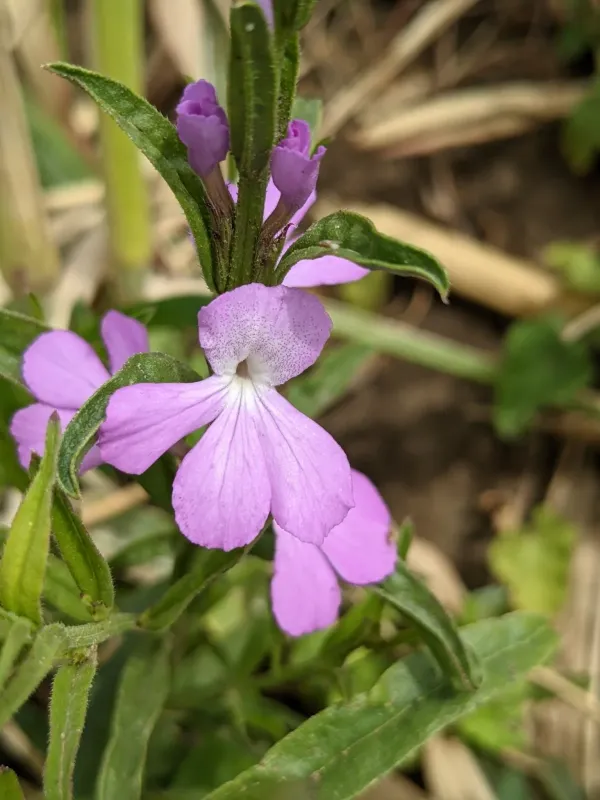
Description
Sowing dates
Striga hermonthica, commonly known as witchweed, is not a crop but a highly destructive parasitic plant belonging to the Orobanchaceae family.
The life cycle of this weed is intrinsically linked to the germination of cereal crops, as its seeds require stimulants called strigolactones to break dormancy.
Upon germination, the seedling attaches itself to the roots of the host plant via a specialized organ called a haustorium, which penetrates the host's vascular system.
This parasitic connection is established long before the weed emerges above the soil surface, allowing it to sap essential nutrients early in the host's development.
A single plant can produce hundreds of thousands of microscopic seeds, creating a massive, long-lived seed bank in the soil that can persist for over a decade.
Growing requirements
Witchweed thrives in nutrient-deficient soils, particularly those low in nitrogen, which is a common condition in many smallholder farming systems in sub-Saharan Africa.
The plant is highly adapted to tropical climates and areas with distinct dry and wet seasons, where temperatures are consistently warm during the growing cycle.
It prefers light-textured, sandy soils that allow for effective chemical signaling between host roots and parasite seeds in the rhizosphere.
Intensive cropping systems without adequate crop rotation or fallow periods encourage the proliferation of Striga, as the presence of continuous host crops sustains the population.
While nitrogen fertilization can reduce the weed's ability to infect hosts, the economic cost of chemical inputs remains a barrier for many local farmers.
Main diseases and pests
Striga hermonthica acts as a severe threat to food security, particularly impacting maize, sorghum, pearl millet, and upland rice production across Africa.
Infected crops show distinct symptoms of nitrogen and water deficiency, leading to stunted growth, leaf chlorosis, and in many cases, total crop failure.
Effective management strategies include the use of host plants that produce fewer strigolactones or have mechanical resistance to haustorial penetration.
The 'push-pull' technology, which utilizes intercropping with trap crops like Desmodium, has shown significant success in reducing Striga infestation levels.
- Crop rotation with non-host crops.
- Use of resistant/tolerant crop varieties.
- Implementation of trap crops.
- Proper soil nutrient management.
- Manual weeding prior to seed set.