
Striga densiflora
Striga densiflora (Benth.) Benth.
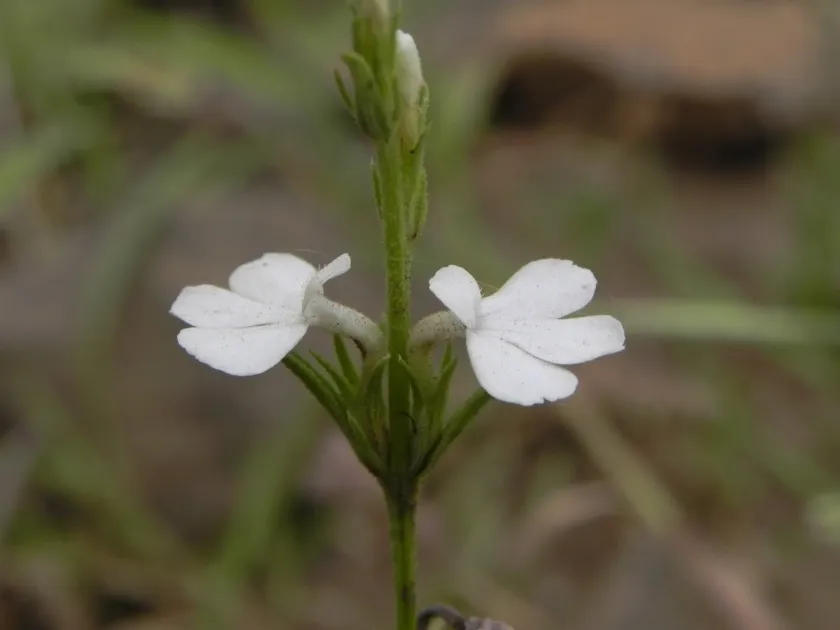
Description
Growing requirements
Striga densiflora is a hemi-parasitic weed belonging to the Orobanchaceae family. As an obligate parasite, it relies on attaching its haustoria to the roots of a host plant to extract water and essential nutrients required for its development and flowering.
The plant is native to the Indian subcontinent and parts of Southeast Asia. Its evolutionary strategy is highly specialized, allowing it to colonize environments where host plants, particularly cereals like sorghum and millet, are grown in poor soil conditions.
Botanically, it features small, green leaves and characteristic dense spikes of flowers, which give the plant its specific name. The plant can photosynthesize independently, but its reproductive success depends heavily on the parasitic interaction with the host root system.
Environmental requirements for Striga densiflora involve warm, tropical, and subtropical climates. It is highly resistant to drought and can survive in arid conditions by entering a state of dormancy until favorable host signals are detected in the rhizosphere.
Agronomic management is challenging due to the hidden phase of infection. Effective practices involve the use of resistant crop varieties, the application of chemical stimulants to induce "suicidal germination" of seeds, and strict field sanitation to prevent the spread of tiny, dust-like seeds.
Main diseases and pests
The primary economic threat posed by Striga densiflora is the significant reduction in yields of essential food crops. By siphoning off resources, it causes stunted growth, chlorosis, and total crop failure in heavily infested agricultural areas.
Host crops often exhibit symptoms that mimic nutrient deficiencies. This is because the parasite effectively steals the energy and metabolic resources the host plant needs for its reproductive phase, leaving it unable to produce grain.
In terms of natural threats to the parasite, certain insect species feed on the floral structures of Striga, acting as potential biological control agents. These include specialized lepidopterans that can reduce the seed output of the weed significantly.
Diseases that affect Striga densiflora are generally rare. Given its life cycle, it is robust against many common agricultural pathogens, making it a persistent problem for smallholder farmers who lack access to specialized chemical herbicides.
Integrated weed management remains the best strategy. This includes crop rotation with legumes or other non-host plants that break the cycle of infection, effectively clearing the soil seed bank over several planting seasons.