
Hyobanche
Hyobanche
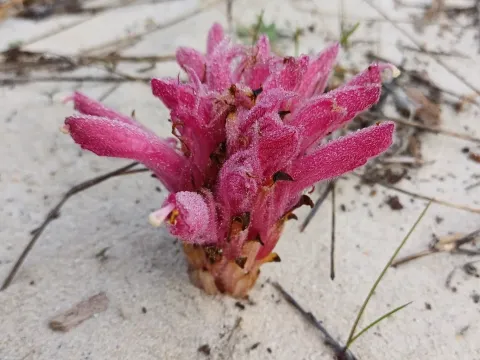
Hyobanche is a genus of obligate root parasitic plants belonging to the Orobanchaceae family. These plants are holoparasites, meaning they lack chlorophyll entirely and are completely dependent on their host plants for nutritional support and survival.
What the section contains

Hyobanche
The genus is native to South Africa, where it thrives in diverse habitats ranging from coastal sands to mountainous regions. It is not an agricultural crop; rather, it is a wild botanical genus that exists within specific ecological niches in the Southern Hemisphere.
Botanically, Hyobanche is characterized by its fleshy, stout flowering spikes that emerge from the soil. The plants are visually striking due to their intense red or pink coloration, which contrasts sharply with the often arid or scrub-dominated landscapes of their home range.
The plant relies on specialized structures called haustoria to penetrate the roots of host plants. By tapping into the vascular system of the host, it extracts water, minerals, and carbohydrates. This biological strategy allows it to complete its life cycle in nutrient-poor environments.
There is no record of agricultural cultivation for Hyobanche, nor is there any commercial utilization of the species. It remains a subject of interest primarily for taxonomists and ecologists investigating the complex relationships between parasitic flora and their host plants in biodiversity hotspots.