
Hoermann's Cow-wheat
Melampyrum hoermannianum
Description
Growing requirements
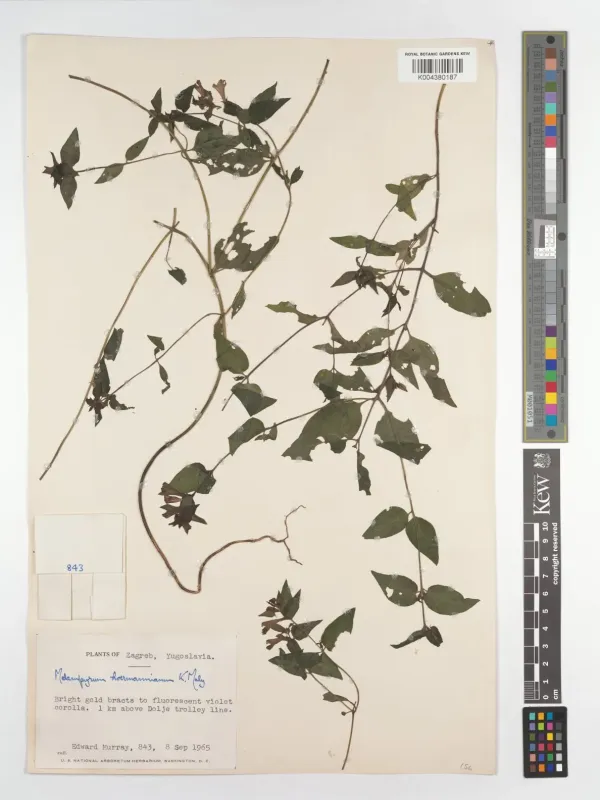
Hoermann's Cow-wheat (Melampyrum hoermannianum) is an herbaceous annual plant belonging to the Orobanchaceae family. It is characterized as a hemiparasite, meaning it can photosynthesize but relies on host plants for additional water and mineral nutrients via root attachments.
The native distribution of this species is restricted primarily to the mountainous regions of Southeastern Europe, particularly the Balkan Peninsula. It thrives in open mountain meadows and sparse forests where light penetration is optimal.
Soil preferences involve well-drained, porous substrates. The species is highly sensitive to waterlogging and typically inhabits rocky or loamy soils typical of its natural elevation zone, ensuring root oxygenation throughout the growing season.
Climatic adaptability is closely linked to its mountainous habitat. It withstands significant diurnal temperature fluctuations well, provided that the soil chemistry supports the complex interaction between the hemiparasite and its host root system.
As this species is not used in conventional agriculture, there are no established commercial cultivation practices. Its management is focused on ecological conservation rather than industrial yield or food production purposes.