
Grisebach's broomrape
Orobanche grisebachii
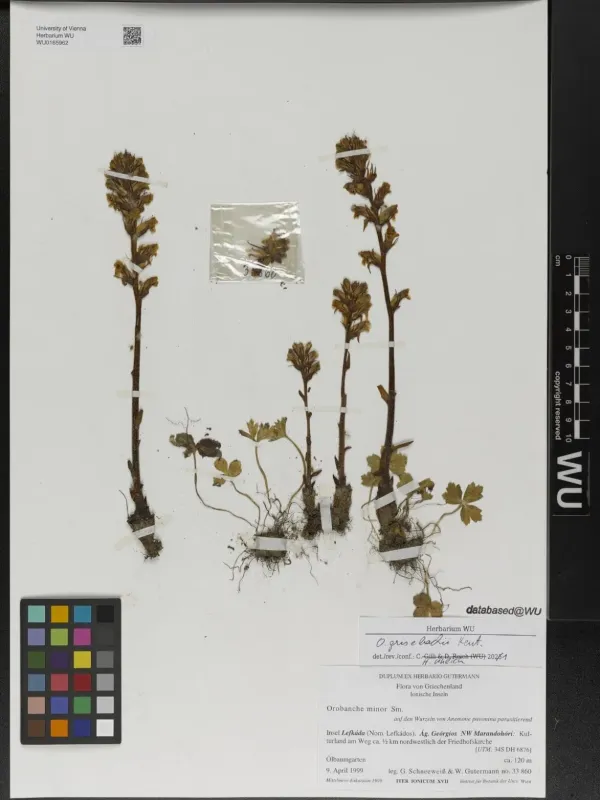
Description
Growing requirements
Grisebach's broomrape (Orobanche grisebachii) belongs to the family Orobanchaceae. This plant is a parasitic organism that lacks chlorophyll, making it completely reliant on the host plant for water, minerals, and nutrients.
The native habitat of this species is primarily located in the Balkan region. It has evolved to thrive in specific ecological niches, effectively attaching itself to the root systems of various herbaceous plants within these landscapes.
A distinctive botanical feature is the development of haustoria, which are specialized structures allowing the parasite to tap directly into the host's vascular tissues. This mechanism ensures an efficient transfer of solutes from the host to the parasite.
The seeds of this species are incredibly resilient and can remain dormant in the soil for many years. They only germinate when they detect specific chemical cues released by the roots of a suitable host plant, indicating the presence of a nutrient source.
From an agronomic perspective, managing this parasite involves controlling the soil seed bank. Environmental conditions that favour the growth of host plants often inadvertently support the infestation cycles of Orobanche, necessitating precise field management.
Main diseases and pests
The main threat posed by Grisebach's broomrape is the depletion of the host plant's physiological resources. This results in stunted growth, reduced photosynthetic efficiency, and significant losses in agricultural yield and quality.
Control strategies emphasize the use of resistant crop cultivars that do not trigger the germination of parasitic seeds. Crop rotation involving non-host species is essential for breaking the life cycle of the broomrape.
Sanitation practices are vital to prevent the spread of seeds via agricultural machinery. Thorough cleaning of equipment when moving between infested and clean fields helps to contain the parasite within localized areas.
Biological control agents, such as specific fly species that feed on the flower stems, play a role in reducing the seed output of the parasite. Integrated pest management programs often rely on a combination of such methods to maintain low population levels.
Manual removal of broomrape stems before they produce seeds is a recommended procedure for small-scale infestations. Once the seeds are dispersed, they can contaminate the soil for an extended period, requiring long-term monitoring efforts.