
Hyobanche sanguinea
Hyobanche sanguinea
Description
Growing requirements
Hyobanche sanguinea is a member of the Orobanchaceae family. It is a total root parasite, which means it lacks chlorophyll entirely and must derive all its carbon, water, and mineral nutrients from the roots of a host plant.
The species is native to South Africa, specifically within the Cape Floristic Region. It is perfectly adapted to the Mediterranean-like climate of this area, characterized by distinct wet winters and dry, hot summers.
This plant is not considered an agricultural crop. Instead, it is an ecological specialist that utilizes hosts from various families, such as Ericaceae or Asteraceae, by forming specialized haustoria that tap into the host’s vascular system.
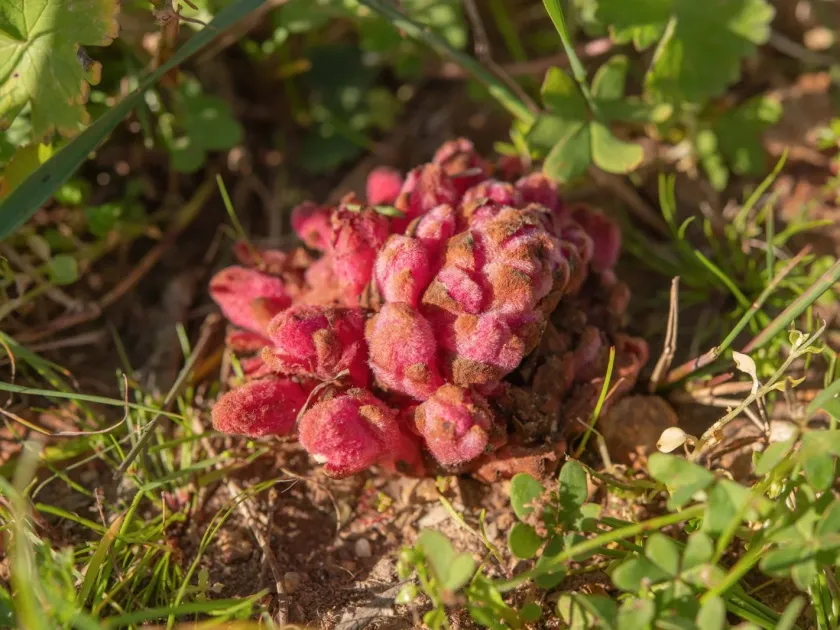
Morphologically, the plant remains mostly subterranean, consisting of a fleshy stem covered with scale-like leaves. Only the vibrant, blood-red inflorescences emerge above the soil surface during the flowering season to attract specific pollinators.
The life cycle is triggered by chemical exudates from the host roots. Germination only occurs in the presence of specific signaling compounds, ensuring that the parasite remains dormant until a suitable connection can be established.
Main diseases and pests
The plant possesses strong chemical defenses, including various alkaloids, which protect it from the majority of herbivores and insects. It does not suffer from traditional agricultural pests or crop diseases.
The primary threat to the stability of this species is habitat destruction, which reduces the availability of host plants required for the parasite to complete its complex and highly specialized biological cycle.