
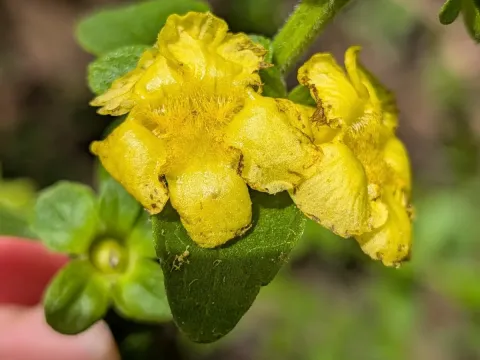
Dasistoma
Dasistoma
Dasistoma is a genus of plants within the Orobanchaceae family, most notably represented by the species Dasistoma macrophylla, which is a rare North American native.
What the section contains

Dasistoma
Biologically, it is classified as a hemiparasite, meaning it maintains chlorophyll and photosynthesizes while simultaneously attaching to the root systems of host plants to extract water and solutes.
This plant species naturally occurs in moist, deciduous forest habitats, riparian zones, and areas with high soil organic matter content that support diverse plant communities.
The success of the plant depends heavily on its ability to establish parasitic connections with specific host species, making it an obligate member of complex ecological networks.
Regarding cultivation and habitat requirements, it demands consistent soil moisture levels and protection from habitat degradation to thrive in its indigenous range.
The primary threats to the survival of Dasistoma species are land development, drainage of riparian ecosystems, and the overall fragmentation of its native forest habitats.
Since the plant relies on established host plants, any disturbance that clears the understory or changes the composition of the plant community threatens its viability.
Invasive plant species present a significant risk by competing for resources and altering the soil chemistry, which can discourage the successful attachment of Dasistoma haustoria.
There is currently limited documentation on specific pests or diseases, largely because the plant is not a commercial crop and exists as a specialized component of stable ecosystems.
Conservation status of the plant is often considered precarious, requiring careful management of wild habitats to prevent the loss of both the hemiparasite and its symbiotic hosts.