
Alpine bartsia
Bartsia alpina
Description
Growing requirements
Alpine bartsia (Bartsia alpina) is a perennial herbaceous plant belonging to the Orobanchaceae family. It is a hemiparasitic species, which means it derives some of its nutrients from the roots of neighboring plants.
The plant is native to the arctic and alpine regions of Europe and North America. It thrives in wet, lime-rich meadows and near mountain streams, where it can successfully establish parasitic connections with host species.
The cultivation requirements are extremely demanding, as the plant needs cool temperatures, high humidity, and specific soil conditions. It does not tolerate heat or dry spells, making it unsuitable for standard agricultural field production.
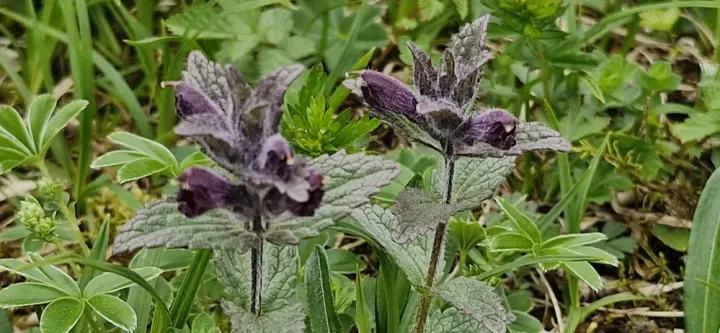
Botanically, it features a stem reaching 20–30 cm in height, with opposite, ovate leaves. The flowers are distinctively dark violet to blackish, arranged in dense, terminal spike-like racemes that make it easy to identify in the field.
In terms of agricultural or economic use, alpine bartsia is not considered a crop. It serves primarily as a vital biological component of alpine tundra and meadow ecosystems, contributing to the biodiversity of protected landscapes.
Main diseases and pests
The primary threats to Bartsia alpina involve climate change and habitat disturbance. As a hemiparasite, its survival is deeply linked to the presence and health of its host plants, which makes it vulnerable to shifts in local biodiversity.
There are no specific pests or diseases of agricultural concern, as the plant is not cultivated commercially. In non-native environments or gardens, however, excessive moisture and poor soil drainage can lead to root rot and fungal infections.