
Weeping forsythia
Forsythia suspensa (Thunb.) Vahl
Description
Growing requirements
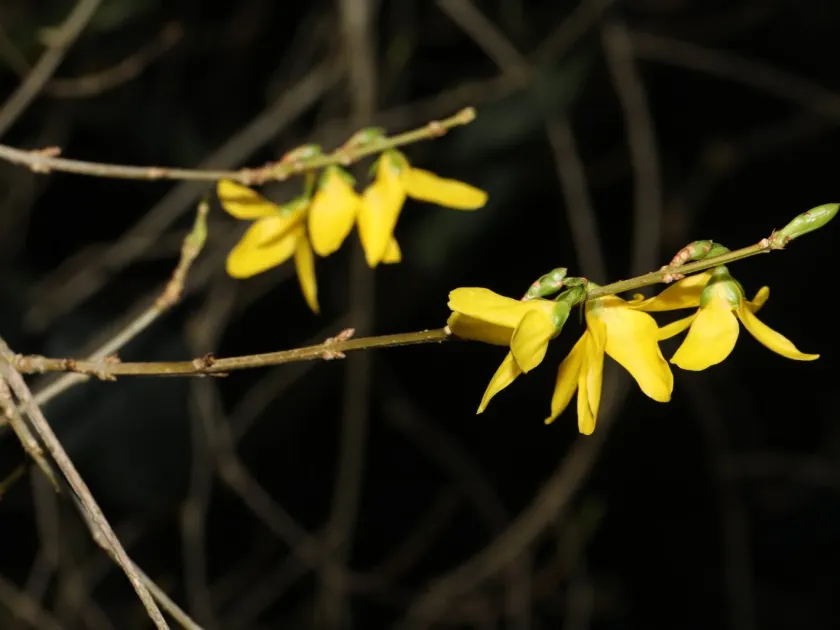
Forsythia suspensa, commonly known as weeping forsythia, belongs to the Oleaceae family. Originating from China, this deciduous shrub is prized for its graceful, pendulous branches that are covered in brilliant yellow flowers during early spring.
For optimal growth, this species requires a location with full sun exposure. While it can adapt to partial shade, lack of direct sunlight will significantly reduce the number of blossoms produced in the following spring, diminishing its ornamental appeal.
The ideal soil for this shrub is fertile, well-drained, and slightly alkaline or neutral. It struggles in waterlogged soil, so planting on slightly raised beds or ensuring excellent drainage in heavier clay soils is essential to prevent root health issues.
Pruning is a fundamental part of maintaining Forsythia suspensa. It should be performed immediately after the flowering period ends. The goal is to remove dead or weak wood and thin out older branches to encourage the development of new, vigorous stems.
The plant is relatively hardy but benefits from protection in regions with harsh winter temperatures. Mulching the root zone helps maintain soil moisture and provides a thermal buffer against sudden temperature drops during the dormant season.
Main diseases and pests
Fungal diseases, such as dieback, are the primary concern for this shrub. These infections typically manifest as wilting of branches during the growing season. Pruning away affected limbs at least 15 cm below the infection point is the standard remedy.
Bacterial blight can cause black spots on leaves and shriveled stems. There is no chemical cure for systemic bacterial infections, so sanitation remains the most critical strategy: always disinfect pruning tools after working on infected specimens.
Root-knot nematodes are parasitic worms that can infest the roots, causing the plant to show signs of nutrient deficiency and stunted growth. Soil solarization or the use of organic amendments can help improve the rhizosphere health.
Aphids are common pests that infest the tender new growth in late spring. While usually not lethal, heavy infestations can cause leaf curl and promote the growth of sooty mold on the honeydew secreted by the insects.
Phytophthora root rot is an opportunistic pathogen that thrives in poorly drained soils. To protect the plant, avoid heavy irrigation during the rainy season and ensure that the area around the base of the shrub remains free of standing water.