
European forsythia
Forsythia europaea Degen & Bald.
Description
Growing requirements
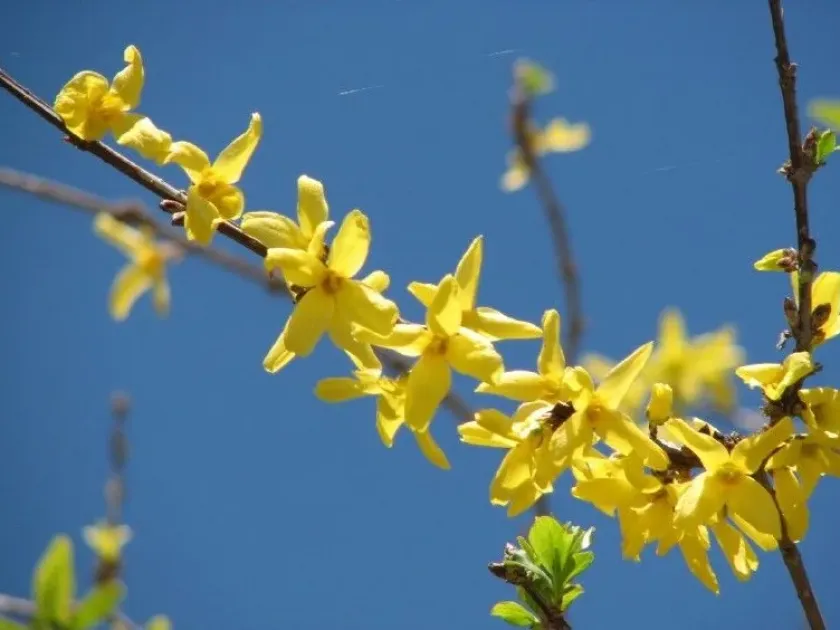
European forsythia (Forsythia europaea) is a deciduous shrub classified under the Olive family (Oleaceae). It is a rare species native to the Balkan Peninsula, specifically localized in parts of Albania and Serbia.
The plant features upright branching patterns and smooth, elliptical green leaves. Unlike its more common Asian counterparts, it is a hardy, upright shrub that grows to a height of approximately two to three meters.
To ensure optimal development, the shrub should be planted in full sun exposure. While it is tolerant of various conditions, exposure to direct sunlight is essential for a dense, floral display during the spring season.
The soil requirements prioritize well-draining, fertile loams with a neutral pH level. It is highly sensitive to waterlogged conditions, which can lead to root rot and long-term decline in plant health.
Agrotechnical care revolves around pruning right after the flowering period ends. This process removes spent blooms and encourages the development of new, vigorous stems that will produce flowers for the following year.
Main diseases and pests
Fungal pathogens such as Monilia and Verticillium wilt are the primary diseases affecting this shrub. They often manifest as wilting branches that eventually dry out and lose vitality.
Bacterial leaf spot can also occur in environments with poor air circulation or excessive moisture levels. Keeping the canopy open through regular pruning is a critical preventative measure.
Insect pests, including aphids and spider mites, can infest the foliage, particularly during dry and hot summer spells, which weakens the overall vitality of the plant.
Root-knot nematodes represent a significant underground threat that may cause stunted growth and a general lack of vigor that is often mistaken for poor nutritional status.
A rigorous sanitary program, involving the removal of dead or diseased wood and the application of balanced fertilizers, ensures the plant remains resilient against these common environmental pressures.