
Border forsythia
Forsythia x intermedia Zabel
Description
Growing requirements
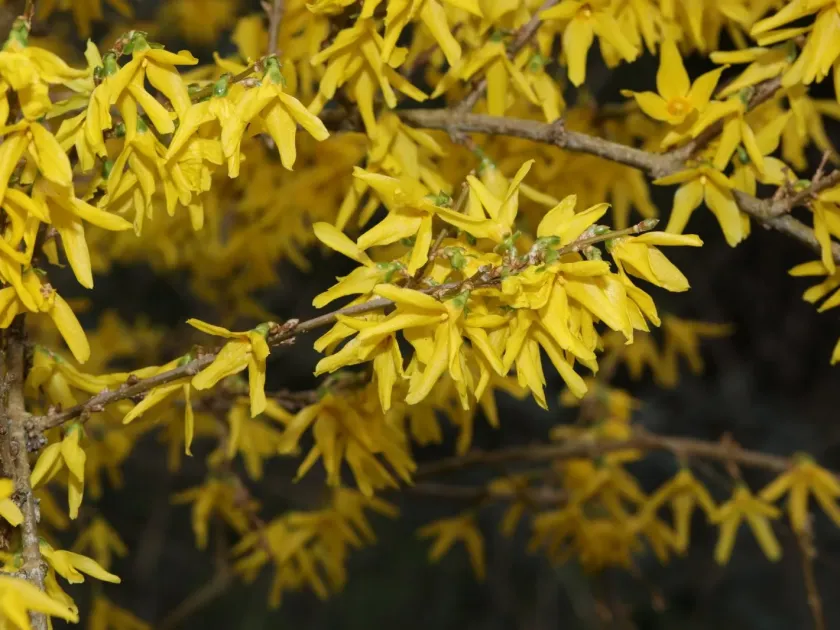
Border forsythia (Forsythia x intermedia) is a popular hybrid deciduous shrub belonging to the Oleaceae family. It is widely recognized for its spectacular, abundant yellow flowers that appear in early spring, creating a vivid landscape display before the leaves emerge.
The plant thrives in full sun, which is essential for maximizing flower production and maintaining a dense, healthy growth habit. It prefers well-drained, fertile soil with a neutral to slightly alkaline pH, ensuring consistent moisture levels throughout the growing season.
Regarding climate, this shrub is hardy and adaptable to temperate regions, although it requires protection from harsh, desiccating winter winds. Proper site selection helps prevent premature bud break during occasional mild spells in late winter.
Cultural practices include regular feeding with a balanced fertilizer in the early spring to promote vigorous development. Maintaining a layer of organic mulch around the base helps regulate soil temperature and moisture levels, suppressing competing weeds.
Pruning is a fundamental part of its maintenance, ideally performed immediately after the flowering period concludes. This encourages the emergence of new, flower-bearing wood and prevents the shrub from becoming overgrown or sparse in the center.
Main diseases and pests
The primary health concerns include fungal infections such as Phomopsis gall and blossom blight, which can cause twig dieback. Maintaining good air circulation and removing dead or diseased wood are critical steps in preventing these issues.
While generally resilient, forsythia may occasionally face challenges from pests like aphids or nematodes, particularly in stressed plants. Early detection and standard horticultural controls are effective in maintaining the health and longevity of the specimen.