
Great bougainvillea
Bougainvillea spectabilis Willd.
Description
Growing requirements
Great bougainvillea (Bougainvillea spectabilis) is a perennial, woody vine belonging to the Nyctaginaceae family. Originally native to Brazil, it is now widely cultivated in tropical and subtropical regions across the globe for its striking ornamental appearance.
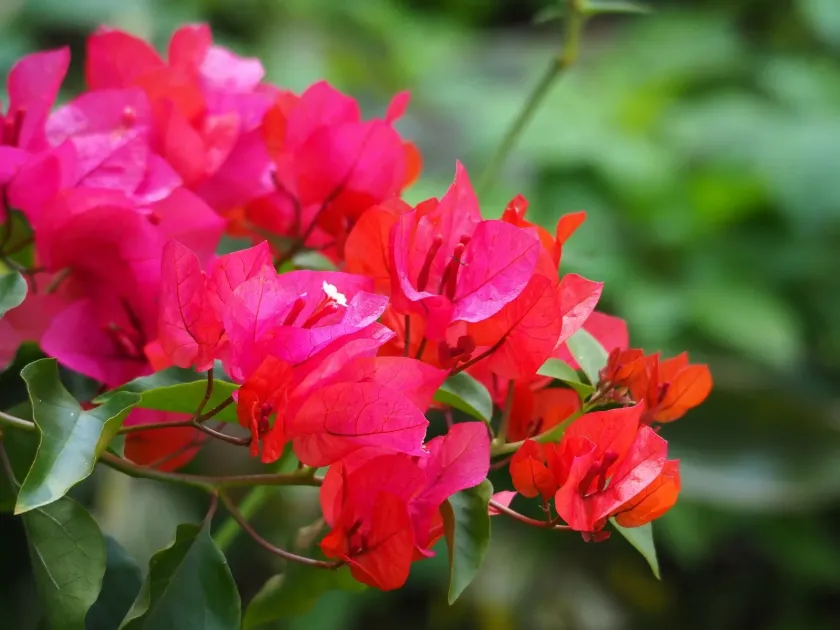
The plant is characterized by its vigorous growth, thorny stems, and large, colorful bracts that surround inconspicuous white or yellow flowers. These bracts serve as the primary visual display, attracting pollinators and making the plant highly desirable for decorative use.
Agronomic requirements include full sun exposure, which is essential for blooming. Even in greenhouse environments, light intensity must be maximized to prevent etiolation and promote healthy flower production. Proper canopy management is necessary to maintain the desired shape.
The soil should be well-drained and slightly acidic to neutral. High moisture retention without waterlogging is key to preventing root rot, as the plant is susceptible to physiological disorders caused by poor aeration in the rhizosphere.
Cultivation practices involve regular pruning to stimulate new flowering growth. Fertilizer application should be balanced, with a focus on phosphorus and potassium during the pre-blooming phase to encourage the development of vibrant bracts.
Main diseases and pests
Major pests affecting this species include mealybugs, aphids, and spider mites. These pests thrive in dry conditions and can cause significant damage to young foliage and tender shoots if not managed through integrated pest control strategies.
Fungal infections, particularly root rot (Phytophthora or Pythium species), are common when drainage is compromised. Foliar diseases such as leaf spots can also occur in high-humidity environments with insufficient air circulation.