
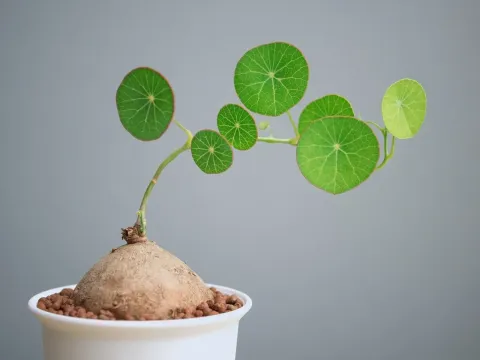
Stephania
Stephania Lour.
Stephania is a genus of flowering plants in the family Menispermaceae, native to eastern and southern Asia and Australia. These plants are widely recognized for their tuberous, succulent-like rootstocks, commonly referred to as caudex.
What the section contains

Stephania
In cultivation, Stephania requires a well-draining, porous soil mix, typically consisting of potting soil, coarse sand, and perlite. The primary objective of the soil composition is to ensure excellent aeration and prevent water stagnation near the tuber.
This crop thrives in bright, indirect light. While it appreciates warmth, it should be protected from direct, scorching sun, which can dehydrate the plant and cause leaf burn, particularly during the peak of summer.
Temperature management is crucial. Stephania prefers temperatures between 20 °C and 25 °C during its growth phase. It enters a natural dormancy period, during which it sheds its leaves and requires lower temperatures around 15 °C.
Proper hydration is the most critical aspect of Stephania's maintenance. Water should be applied only when the soil has dried out completely. Overwatering often leads to irreversible rot of the succulent tuber.
Root and tuber rot are the most prevalent issues encountered when growing Stephania. These conditions are almost always the result of overwatering or using a medium that retains too much moisture for too long.
Spider mites are common pests that thrive in the dry environments where Stephania is often grown. These pests feed on sap, causing visible stippling on the leaves and, if left untreated, significant plant decline.
Mealybugs can also infest the plant, hiding in the leaf axils or near the base of the stems. Their presence is marked by a white, cottony substance, which necessitates immediate treatment with insecticidal soap or systemic insecticides.
Fungal pathogens may target the tuber if physical damage or moisture stress occurs. Maintaining good hygiene by cleaning pots and sterilizing tools helps reduce the risk of secondary infections spreading through the collection.
Effective pest control requires consistent monitoring of the plant, especially during the active growing season. Early intervention is the key to maintaining a healthy specimen and preventing the spread to other crops.