
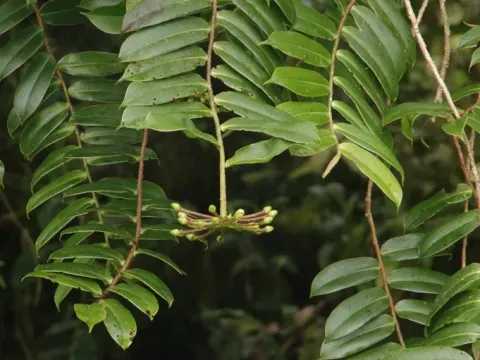
Marcgravia
Marcgravia
Marcgravia is a genus of flowering plants in the family Marcgraviaceae, native to the tropical regions of Central and South America. These climbing shrubs or vines are highly sought after by collectors of exotic flora for their unique, often shimmering foliage and distinctive growth habits.
What the section contains


Marcgravia
To cultivate Marcgravia successfully, one must replicate its natural habitat. This means maintaining high ambient humidity, ideally above 70%, which is why these plants are most commonly found in terrariums, vivariums, or humidified display cases.
The substrate should be light, airy, and moisture-retentive. A mix of New Zealand long-fiber sphagnum moss, orchid bark, and a small portion of peat or coco coir provides the necessary drainage while maintaining the moisture level that the roots require to thrive.
Temperature requirements are consistent throughout the year, with an ideal range between 20°C and 28°C. Avoid exposing these plants to cold drafts or temperatures below 15°C, as this can lead to leaf drop and severe stress to the plant's vascular system.
Regarding commercial use, Marcgravia is primarily valued in the specialty ornamental industry. It serves as a flagship plant for vertical vivarium walls and bioactive setups, where it serves both an aesthetic purpose and a functional role in stabilizing the humidity and micro-ecosystem.
Root rot is the most significant threat to Marcgravia, usually caused by overwatering or poor drainage. It is imperative to ensure that the roots are not left sitting in water, as this prevents necessary gas exchange and promotes fungal development.
Pest pressures include mites and scale insects. Because of the plant's sensitivity, manual removal or the application of mild, diluted organic soaps is recommended over harsh chemical treatments when managing infestations in small, closed environments.