
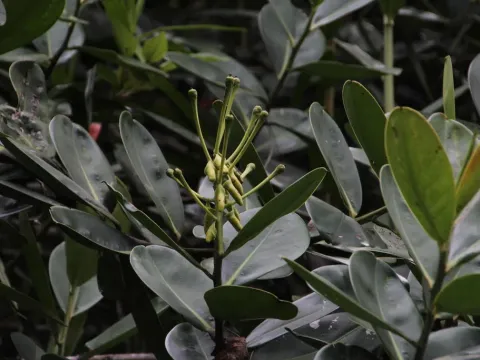
Schwartzia
Schwartzia
Schwartzia is a genus of plants belonging to the family Marcgraviaceae. These plants typically grow as epiphytic or hemi-epiphytic shrubs and vines, naturally occurring within the dense canopy layers of humid tropical forests.
What the section contains

Schwartzia
The native range of the genus is concentrated in Central and South America. In cultivation, Schwartzia demands stable, tropical-like conditions where temperatures remain consistent and high humidity is maintained throughout the growing season.
Soil requirements for Schwartzia involve highly permeable, organic-rich substrates. Growers often use specialized potting mixes containing orchid bark, peat, and perlite to ensure excellent drainage and root aeration, mimicking the conditions of their natural forest habitat.
Light management is crucial, as these plants prefer bright but indirect sunlight. Direct exposure to intense rays can damage the foliage, so greenhouse cultivation requires light filtration systems to simulate the filtered light of the forest floor.
The primary use of the plant is ornamental, prized by collectors and botanical gardens for its unique and often complex inflorescences. Due to its specific climate requirements, it remains a specialty crop suitable for controlled environment horticulture.
Root rot, induced by waterlogging or poor drainage, is the most significant threat to Schwartzia. Maintaining a delicate balance between moisture and soil aeration is essential to prevent the proliferation of soil-borne pathogens.
Spider mites are common pests that thrive in low-humidity environments. They cause stippling on the leaves and can lead to rapid decline if not managed through proper misting and specialized acaricide treatments.
Mealybugs are another common challenge, often congregating in leaf axils. Frequent inspection is necessary, as these insects can quickly sap the plant's vitality, leading to stunted growth and foliage yellowing.
Fungal leaf spot diseases may appear if there is poor air circulation in the greenhouse. Improving ventilation and reducing overhead watering can significantly decrease the incidence of these fungal infections.
In cases of suspected viral infections, which manifest through mosaic patterns or deformed growth, the affected plant should be isolated immediately. Hygiene practices, such as sanitizing cutting tools, are critical to prevent further spread in a plant collection.