
Marcgravia trinitatis
Marcgravia trinitatis
Description
Growing requirements
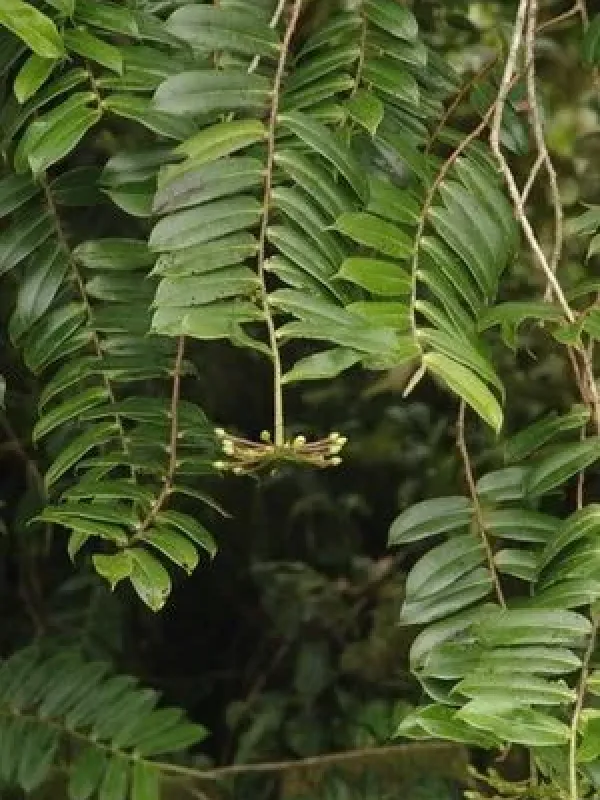
Marcgravia trinitatis is a distinct species within the Marcgraviaceae family, native to the tropical forests of Trinidad and the Caribbean. In its natural habitat, it acts as a climbing epiphyte, showcasing a unique growth pattern characterized by small, overlapping leaves in its juvenile phase.
Cultivation of this species requires a strictly controlled environment, typically provided by high-end terrariums or closed glass containers. The plant demands a constant humidity level exceeding 75%, which is difficult to maintain in standard household conditions without specialized equipment.
Lighting should mimic the diffused light of the rainforest floor. Excessive direct light can damage the delicate foliage, while insufficient light leads to spindly, weak growth. Utilizing full-spectrum LED lights with a moderate intensity for 10–12 hours a day is recommended for healthy development.
The growing medium must be highly porous and moisture-retentive. A mix of long-fiber sphagnum moss, orchid bark, and perlite provides the necessary aeration for the sensitive root system. Avoid heavy soil mixes that compress and suffocate the roots over time.
Temperature management is crucial, as the plant thrives in temperatures between 22 and 26 degrees Celsius. Avoiding sudden temperature drops and chilly drafts is essential, as the species is sensitive to rapid environmental changes which can cause leaf drop and growth stress.
Main diseases and pests
Root rot is the most common threat to Marcgravia trinitatis, almost always caused by waterlogged substrate or poor drainage. Ensuring that the medium remains moist but never saturated is the key management strategy to prevent fungal outbreaks in the root zone.
Air circulation is vital for preventing the accumulation of stale, humid air that promotes bacterial and fungal infections. If the terrarium lacks proper ventilation, leaf spot diseases can manifest rapidly, requiring immediate removal of affected tissue and improved airflow.
Spider mites represent the primary pest challenge, especially in environments where humidity levels fluctuate. These microscopic pests target the undersides of leaves, causing significant damage that may go unnoticed until the plant's health begins to decline noticeably.
Mealybugs can also infest the stems, particularly at the nodes where the plant attaches to its support. Regular monitoring and physical removal, or the use of mild horticultural oils, are the standard methods for managing these sap-sucking pests in a controlled environment.
Maintaining biological hygiene is the most effective defense strategy. By isolating new plants before introducing them to an established collection and using only sterile components in the substrate, growers can minimize the risk of pathogen entry and preserve the health of the specimens.