
Durian
Durio zibethinus L.
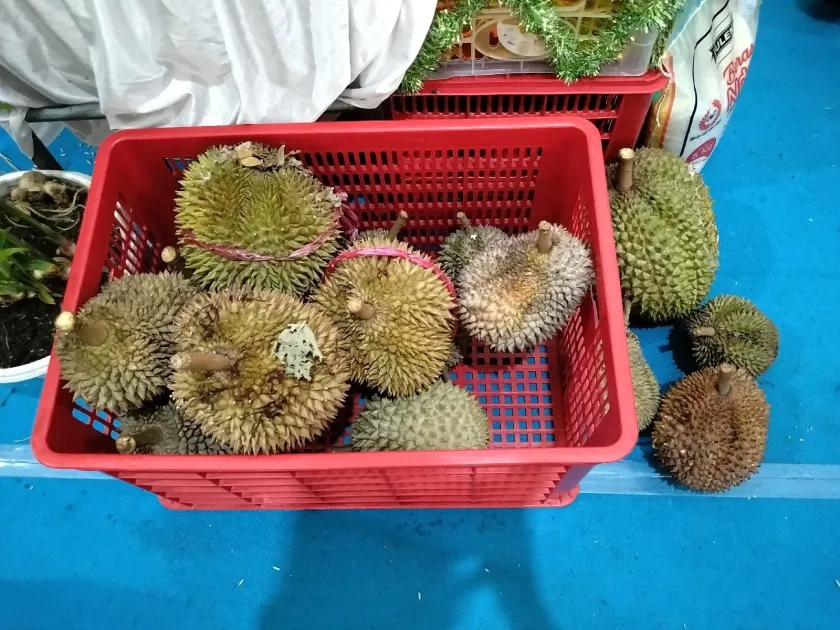
Description
Sowing dates
Durian (Durio zibethinus L.), a member of the Malvaceae family, is a tropical fruit tree that requires precise propagation methods to ensure consistent fruit quality in commercial plantations.
While seed propagation is possible, it is avoided for commercial purposes due to genetic variability; instead, vegetative propagation methods like budding and grafting are standard practice.
Healthy seedlings are usually grafted onto vigorous rootstocks, which improves the tree's resistance to soil-borne diseases and reduces the time to maturity.
Planting in the field is ideally timed to coincide with the beginning of the rainy season to provide the necessary moisture for successful establishment and root development.
Given the expansive canopy of a mature tree, recommended spacing is typically between 10 and 12 meters to allow for optimal sunlight penetration and airflow between trees.
Growing requirements
The durian is strictly a tropical crop, requiring a consistent, warm climate with temperatures ranging from +24°C to +30°C throughout the year.
The species is extremely sensitive to thermal fluctuations, and any exposure to cold temperatures or frost can lead to significant physiological damage or tree mortality.
High humidity levels of around 80% and consistent, well-distributed annual rainfall are essential for sustaining the metabolic activities and growth of the tree.
Soil quality is a critical factor for success; the tree requires deep, fertile, and well-drained soils, typically favoring loamy or alluvial substrates.
Waterlogging is highly detrimental to the root system, making proper site selection and drainage management imperative for long-term productivity of the orchard.
Yield
The yield of a durian orchard is determined by the specific cultivar, the age of the tree, and the implementation of sound agricultural practices.
Grafted trees usually begin to bear fruit within 4 to 6 years, with yields increasing significantly as the trees enter their prime maturity phase.
A single healthy tree can produce between 50 and 150 fruits per season, although this varies greatly depending on the effectiveness of natural pollinators.
Effective pollination is vital, as durian flowers are primarily pollinated by bats and certain species of insects, requiring a healthy local ecosystem.
Proper management of nutrient levels and irrigation during the fruit-set phase is essential to maximize the total tonnage of harvestable fruit per hectare.
Main diseases and pests
Phytophthora palmivora, causing patch canker, is the most destructive disease affecting durian trees, often leading to rapid decline and death of the plant.
Anthracnose caused by Colletotrichum species can lead to severe defoliation and fruit rot, particularly in regions with high seasonal humidity levels.
The durian fruit borer is a primary insect pest, where larvae penetrate the fruit rind, rendering the fruit commercially valueless and attracting secondary infections.
Various scale insects and mealybugs can infest the foliage and branches, draining the tree of nutrients and reducing overall photosynthetic capacity.
Management strategies include canopy thinning to promote airflow, rigorous sanitation to remove infected tissue, and the targeted application of certified pesticides.
Harvesting
Harvesting is a critical operation, as the timing must be precise to ensure the fruit has reached full physiological maturity for the best flavor profile.
Professionals often monitor the color and the scent of the fruit, as well as the ease with which the fruit detaches from the branch upon reaching ripeness.
In many regions, workers utilize safety nets below the canopy, as mature durians drop naturally, and impact damage must be minimized to preserve quality.
Post-harvest handling is complex due to the heavy, thorny exterior, which necessitates careful sorting and packing to avoid punctures or mechanical bruising.
Storage life of fresh durian is relatively short, so prompt logistics and distribution are required to maintain the market value of the harvested produce.