
Okra
Abelmoschus esculentus (L.) Moench
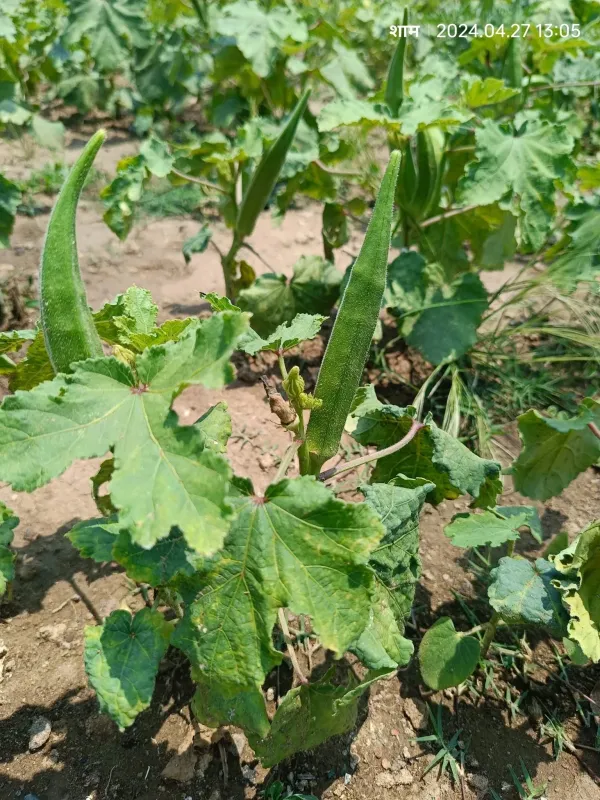
Description
Sowing dates
Okra is a heat-loving plant, so sowing should only begin after the soil has warmed up to 15-18°C. The optimal time for planting in open ground is late May or early June, once the risk of night frosts has completely passed.
In regions with shorter summers, the transplanting method is recommended. Seeds are sown in peat pots 30–45 days before the planned outdoor planting, as the crop does not tolerate root disturbance well due to its taproot system.
The planting depth for seeds is 2–3 centimeters. To accelerate germination, seeds are soaked in warm water for 24 hours prior to planting, which helps soften the hard seed coat and improves the germination rate.
The planting pattern depends on the variety, but generally, a spacing of 30–40 centimeters between plants is recommended. Row spacing should be at least 60 centimeters to ensure adequate light exposure and ease of maintenance.
The crop is extremely temperature-sensitive; development practically stalls when temperatures drop below 10°C, so in northern latitudes, it is better to grow okra in plastic tunnels or greenhouses.
Growing requirements
Okra requires sunny locations protected from strong winds. The crop is very demanding in terms of heat, with optimal growth occurring when air temperatures remain in the range of 20°C to 30°C.
Light, sandy loam or loamy soils with high organic matter content and a neutral pH are preferred. Waterlogged or heavy clay areas with poor drainage are fatal to the root system.
The irrigation regime should be moderate but regular. While the plant has moderate drought tolerance, insufficient moisture during the flowering and pod formation stages can cause flower drops, significantly reducing yield.
Fertilization is a mandatory element of cultivation. At the beginning of the season, nitrogen is applied to promote vegetative growth, and during flowering, the focus shifts to phosphorus-potassium compounds to enhance fruit production.
Regular weeding and hoeing between rows help suppress weeds and improve soil aeration. Mulching the beds with organic materials helps retain moisture longer and prevents the root system from overheating during hot periods.
Yield
The first pods can be harvested 50–70 days after full germination, depending on variety and climate. The harvest period continues until autumn and the arrival of the first significant cold weather.
Okra yield largely depends on care intensity and the regularity of harvesting. The more frequently young pods are picked, the more actively the plant will form new flowers and fruit.
The average yield per plant with proper agrotechnics ranges from 0.5 to 1.5 kilograms of fruit. On a commercial scale, yields can reach 5–10 tons per hectare with intensive farming technologies.
Productivity also depends on the correct choice of hybrids. Breeders have developed varieties adapted to different conditions, including dwarf forms for container gardening and tall varieties for open fields.
To maintain potential yield, it is critical not to let pods overgrow. If pods become woody and fibrous, they lose culinary value, and the plant redirects resources to seed formation, slowing down the production of new pods.
Main diseases and pests
The main pests of okra are aphids, spider mites, and nematodes. Aphids suck juices from young leaves causing deformation, while spider mites multiply in low humidity, leading to leaf yellowing and premature shedding.
Among diseases, fungal infections are the most dangerous, such as powdery mildew, verticillium wilt, and various types of root rot. These diseases often develop due to improper irrigation or poor greenhouse ventilation.
For pest control, the use of biological insecticides is recommended, as they are safe for human consumption shortly after treatment.
Disease management relies on crop rotation principles: okra should not be grown in the same spot more than once every 3-4 years and should not follow tomatoes or peppers due to shared susceptibility to diseases among Malvaceae and Solanaceae families.
An important protection technique is sanitary pruning of lower leaves to improve air circulation. If infestation spots are detected, affected plant parts should be immediately removed and disposed of away from the plot.
Harvesting
Harvesting is carried out daily or every other day during the morning hours. Young, immature pods aged 3–5 days after flowering, when they reach 5–10 centimeters in length, are best for consumption.
Harvesting must be done wearing gloves, as the surface of okra stems and leaves is covered in stiff, microscopic hairs that cause severe skin irritation upon contact.
Pods should be cut with a sharp knife or pruning shears, leaving a short stem. Tearing them by hand often damages the plant's delicate tissues, potentially leading to fungal or bacterial infections of the wound.
Fresh okra has a very short shelf life—no more than 2-3 days in the refrigerator, after which the pods quickly wilt and become tough. For long-term storage, pods are typically frozen, dried, or pickled.
Culinary uses include preparing soups, stews, sides, and salads. Due to its high mucilage content, okra is ideal for thickening dishes and providing the specific texture prized in Mediterranean and Asian cuisines.