
Velvet horehound
Marrubium velutinum
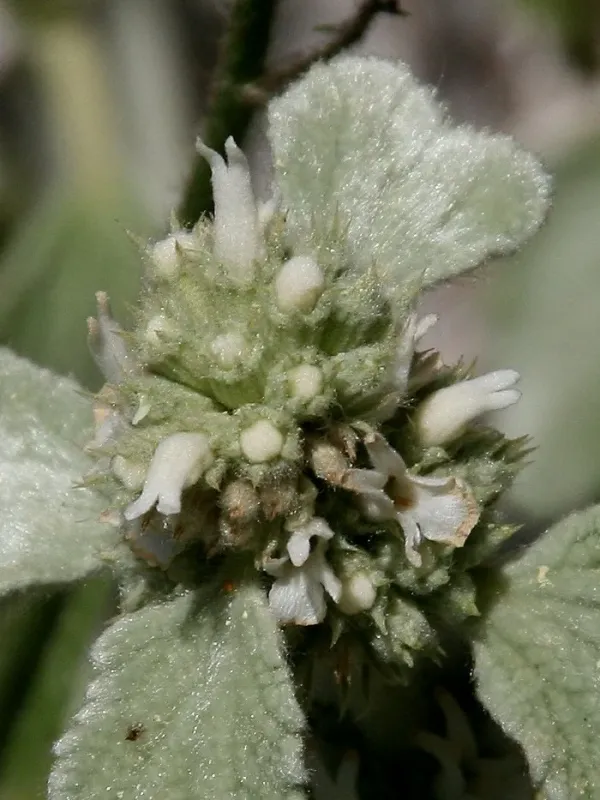
Description
Sowing dates
The sowing of Marrubium velutinum, commonly known as velvet horehound, is best performed in early spring once soil temperatures reach 8–10 degrees Celsius.
Seeds should be sown at a shallow depth of approximately 0.5–1 centimeter, as they require light to germinate effectively and are susceptible to burial too deep.
Optimal spacing between rows should be maintained at 45–60 centimeters to ensure adequate airflow and facilitate mechanical weeding throughout the growing season.
For large-scale cultivation, drilling methods are preferred, maintaining a seed density that allows for 5–8 plants per linear meter to maximize uniform development.
Proper soil moisture during the germination phase is critical, often requiring a light cover of mulch or controlled irrigation to prevent the soil surface from crusting.
Growing requirements
Velvet horehound thrives in full sun, which is essential for maximizing the concentration of its secondary metabolites and essential oils within the leaf tissue.
The plant prefers well-drained, sandy-loam soils with a neutral pH, demonstrating poor performance in heavy clay soils that are prone to waterlogging and compaction.
As a drought-tolerant species, Marrubium velutinum features dense trichomes on its foliage that help regulate water loss under high-temperature conditions.
Soil fertility requirements are relatively low, but a balanced application of nitrogen, phosphorus, and potassium during early development helps establish strong plants.
It is crucial to avoid low-lying sites where cold air or water might settle, as these conditions increase the susceptibility of the crop to environmental stress and diseases.
Main diseases and pests
Powdery mildew is a common fungal threat to the crop, especially in humid conditions where dense canopy growth prevents the necessary ventilation between plants.
Root rots caused by various soil-borne pathogens can devastate plantations if the irrigation regime is not strictly monitored and drainage is insufficient.
Aphids and spider mites are the primary insect pests, capable of causing significant yield losses by damaging the tender growth points and spreading viral infections.
Integrated Pest Management (IPM) strategies, including the use of beneficial insects, are highly recommended to minimize chemical residues on medicinal-grade raw material.
Crop rotation protocols should be followed to reduce the accumulation of soil-borne pathogens, ensuring that the field remains healthy for future harvest cycles.
Harvesting
Harvesting should be timed precisely with the peak flowering period, which is when the phytochemical content and aromatic properties of the leaves are at their highest.
Using mechanical harvesters or hand sickles, the top 20–30 centimeters of the flowering stalks are cut, ensuring the rootstock remains healthy for subsequent years.
Immediately after cutting, the raw material must be transported to a drying facility to prevent fermentation or degradation caused by trapped heat and moisture.
Drying is best performed in a dark, climate-controlled environment with forced air circulation to preserve the volatile compounds that define the plant's value.
Once dried to a moisture content of approximately 10–12 percent, the herb can be processed or stored in airtight containers for extended periods without significant quality loss.