
Bluebeard
Caryopteris x clandonensis A. Simmonds ex anon.
Description
Growing requirements
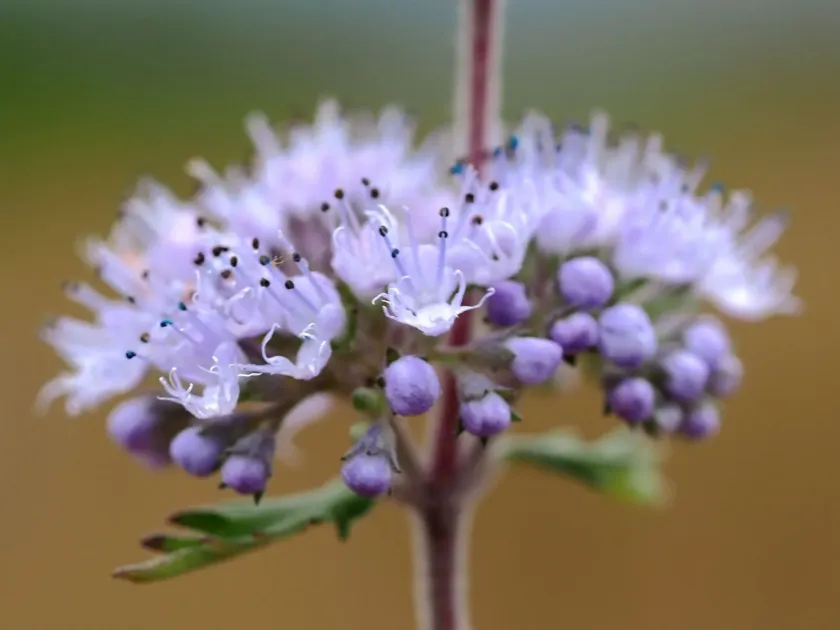
Bluebeard, scientifically known as Caryopteris x clandonensis, is a hybrid deciduous shrub belonging to the Lamiaceae family. It is widely cultivated for its late-season blooms, providing deep blue and purple flowers when many other plants have finished flowering.
This species thrives in full sun exposure. Adequate light is critical for maintaining a compact growth habit and encouraging prolific flowering. Plants grown in partial shade often become leggy and produce significantly fewer blooms during the season.
The plant demands well-drained, fertile soil to perform optimally. It is particularly sensitive to heavy, wet soils that remain waterlogged during winter, which can lead to root rot and the eventual death of the shrub.
In terms of climate, it is moderately hardy. While it can withstand periods of drought once established, it requires protection from severe frosts in colder regions. Applying a layer of mulch around the root zone helps conserve moisture and protect the crown during winter.
Management practices primarily focus on hard pruning in early spring. Since the flowers develop on new growth, cutting the plant back significantly every year promotes dense branching and results in a more vigorous display of blossoms throughout the autumn months.
Main diseases and pests
Caryopteris is generally resistant to most pests and diseases. The primary risk factor for this plant is excess moisture, which can cause crown rot or other fungal complications in poorly drained soils.
Pests such as aphids or spider mites may occasionally infest the plant, typically during periods of heat stress or extreme drought. Regular monitoring and, if necessary, the application of horticultural oil or insecticidal soap are usually sufficient for control.