
Betony-leaved catnip
Nepeta betonicifolia
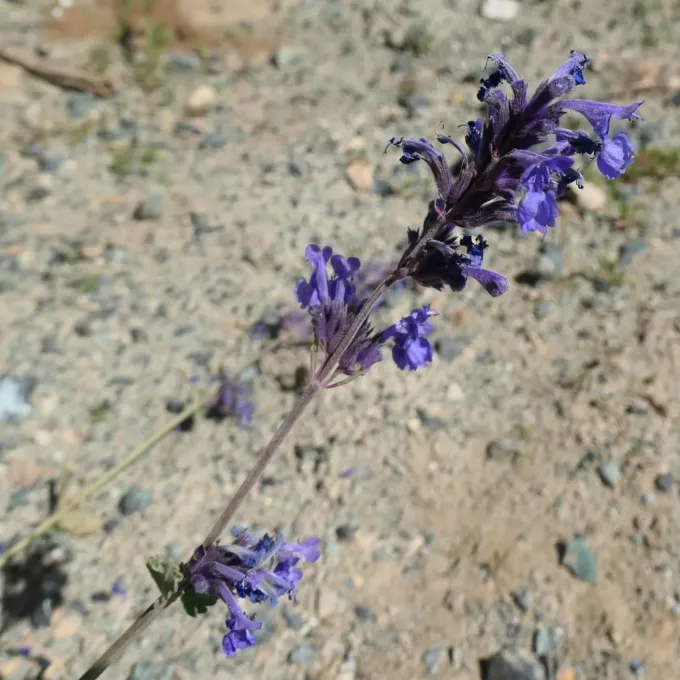
Description
Sowing dates
Sowing of Nepeta betonicifolia is primarily conducted in the spring when soil temperatures reach 8–10 degrees Celsius. In regions with milder climates, late-autumn sowing is also feasible.
To ensure uniform emergence, seeds should be sown at a depth of no more than 1–1.5 centimeters, as they are small and require close contact with a moist substrate.
The optimal sowing pattern involves row spacing of 45–60 centimeters, which facilitates subsequent mechanical weeding and soil maintenance.
The seeding rate is approximately 2–3 kilograms per hectare, and it is essential to ensure a level field surface before beginning the sowing operations.
Seedlings typically emerge within 14–20 days after planting, during which it is critical to maintain an optimal moisture level in the upper soil profile.
Growing requirements
Nepeta betonicifolia belongs to the Lamiaceae family and is highly drought-tolerant, making it suitable for cultivation in open, sun-exposed fields.
The crop prefers light sandy or loamy soils with good aeration and drainage, as water stagnation can be detrimental to the plant's root system.
The plant responds well to moderate applications of nitrogen-phosphorus fertilizers, which stimulate vegetative growth and the accumulation of essential oils.
The optimal soil pH range for growing this species is between 6.0 and 7.5, which is typical for most steppe and forest-steppe soil types.
As a perennial plant, it exhibits high frost resistance, allowing it to successfully overwinter without additional cover in temperate climate zones.
Yield
The yield of green mass of Nepeta betonicifolia depends on the level of agrotechnics, ranging from 8 to 15 tons per hectare with proper management.
Essential oil yield per unit area depends on the growth stage; peak concentrations of beneficial compounds are observed during the mass flowering phase.
When grown commercially for medicinal raw material, the crop provides stable harvests for 4–5 years in the same location without declining productivity.
The economic viability of the crop is ensured by its high nectar production and the demand for essential oil raw materials in perfumery and pharmacy.
Implementing a proper fertilization system and effective early-stage weed control significantly increases the marketable yield per hectare.
Main diseases and pests
Powdery mildew is a primary disease, often affecting leaves during periods of high humidity or in overcrowded plantings, which degrades raw material quality.
Various root rot pathogens may occur if irrigation regimes are not managed correctly, particularly in heavy soils prone to compaction.
Pests such as aphids and spider mites can damage young shoots, slowing plant development during the early stages of the growing season.
Integrated pest management strategies, including crop rotation, high-quality seed selection, and timely weeding, are recommended for crop protection.
Biological control agents or plant-based extracts are preferred over synthetic chemicals when cultivating medicinal raw materials for pharmaceutical use.
Harvesting
Harvesting is conducted during the mass flowering phase, when the concentration of biologically active substances in the aerial parts is at its peak.
The green mass is mowed at a height of 10–15 centimeters above the soil surface to ensure rapid regrowth for subsequent harvests.
Harvested material must undergo rapid drying in shaded, well-ventilated areas or in specialized dryers at temperatures not exceeding 40 degrees Celsius.
Post-drying processing involves removing impurities and coarse stems, followed by packaging in natural fiber bags for storage.
Timely harvest prevents seed shattering and the loss of volatile essential components, ensuring the final product meets high market standards.