
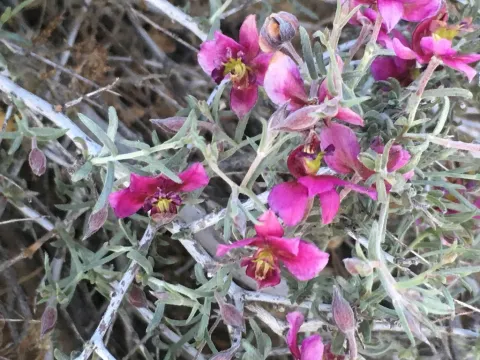
Krameria
Krameria
Krameria is a genus of flowering plants comprising shrubs and subshrubs, representing the sole genus within the family Krameriaceae. These plants are scientifically recognized for their unique root-hemiparasitic habit, which allows them to derive essential water and minerals from the roots of host plants while performing photosynthesis.
What the section contains


Krameria
The native distribution of the genus spans across the Americas, primarily inhabiting arid and semi-arid environments in the United States, Mexico, and South America. They have evolved to thrive in harsh, sun-drenched landscapes where water availability is chronically limited.
Soil requirements for Krameria are strictly related to drainage. The plants necessitate coarse, sandy, or rocky substrates where water infiltration is rapid, as any stagnation leads to immediate degradation of the root system and plant mortality.
Climatic adaptability is one of the most prominent features of the genus, allowing it to withstand high heat and prolonged drought. These plants require a high photoperiod and benefit from significant temperature fluctuations, which are standard for the desert ecosystems they occupy.
Host relations are crucial for the establishment of Krameria. The presence of suitable host species is a biological requirement for the successful development and survival of these plants, as their own root efficiency is specialized for parasitism rather than independent nutrient absorption.
Root rot and fungal infections remain the primary biological threats to Krameria, especially when introduced to artificial or modified environments. Excess soil moisture or poor drainage conditions immediately trigger these pathological processes.
Insects, particularly those that feed on root tissue, pose a significant threat. Because Krameria relies on its root connections for survival, any damage to this system directly impacts its physiological integrity and ability to compete for resources.
Herbivory by desert wildlife, while natural, can be a major stressor for younger plants. Grazing impacts the photosynthetic capacity of the plants, forcing them to divert energy from reproduction to recovery, which is slow given their arid-adapted growth rate.
Environmental degradation, including land clearing and loss of host plant diversity, represents a long-term threat to the survival of Krameria populations. The interdependence between the parasite and the host makes the species sensitive to changes in the surrounding flora.
Control methods for pests and diseases are currently underdeveloped because the plant is primarily harvested from wild populations. Research into sustainable harvesting and natural protection remains essential for the preservation of its medicinal utility.