
Krameria erecta
Krameria erecta
Description
Growing requirements
Krameria erecta, commonly known as littleleaf ratany, is a perennial subshrub belonging to the family Krameriaceae. This species is unique for its semi-parasitic behavior, as it develops specialized root structures called haustoria to extract water and nutrients from the roots of host plants.
The plant is native to the arid regions of the southwestern United States and northern Mexico. It typically thrives in desert ecosystems, exhibiting a remarkable ability to survive in environments with high heat, high solar radiation, and very low precipitation levels.
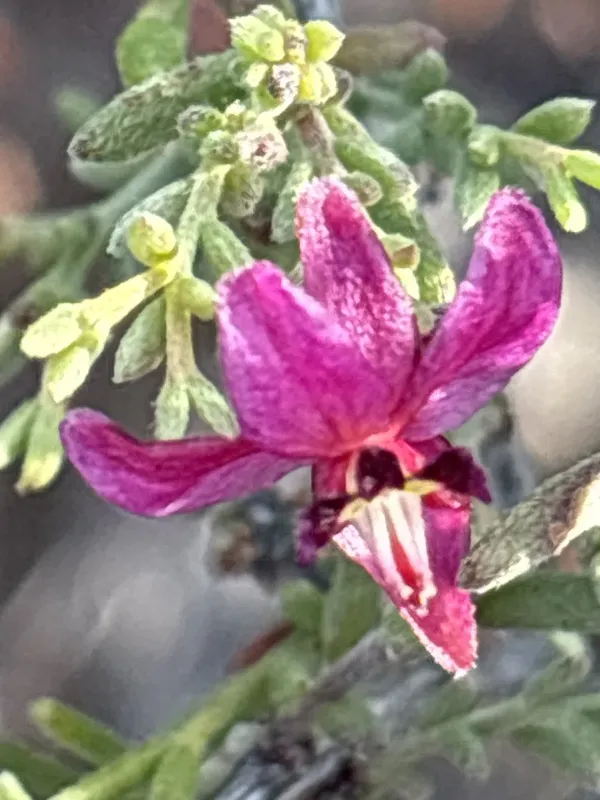
Botanically, Krameria erecta is characterized by a sprawling growth habit with thorny branches and small, silver-gray leaves. These morphological features are adaptations to minimize water loss through transpiration, allowing the plant to remain green even during prolonged dry spells.
Cultivation requirements involve highly porous, well-draining, sandy or rocky soils that mimic its natural desert habitat. It is essential to ensure that the moisture levels remain low; over-irrigation is the most common cause of failure in attempts to grow this species.
The economic value of this plant is primarily linked to its high tannin content, which has historically been extracted from the roots for use in medicinal astringent preparations and as a traditional dye for fabrics and leather processing.
Main diseases and pests
The primary threats to Krameria erecta health are root-borne fungal diseases, which are almost exclusively triggered by improper irrigation and waterlogged soil conditions. These pathogens rapidly destroy the root system and the connection to the host plant.
Insect pests, including various species of desert-dwelling weevils and coleopterans, can cause damage by feeding on young shoots and reproductive buds. This herbivory reduces the plant's vigor and its potential for producing seeds for future cycles.
Another significant risk is the absence of suitable host species within the immediate root zone. As a facultative parasite, Krameria erecta requires a compatible neighbor to successfully complete its development cycle and maintain optimal growth rates.
Abiotic stress, specifically extreme long-term drought that exceeds the plant's adaptive capacity, can lead to the necrosis of stems and premature tissue death. Furthermore, habitat degradation due to soil compaction negatively impacts the gas exchange required for its roots.
Although it is a resilient desert native, it is susceptible to secondary infections if the stems are physically damaged. Maintaining a protective distance from livestock and heavy agricultural machinery is necessary to keep the population healthy and productive.