
Trailing ratany
Krameria lanceolata
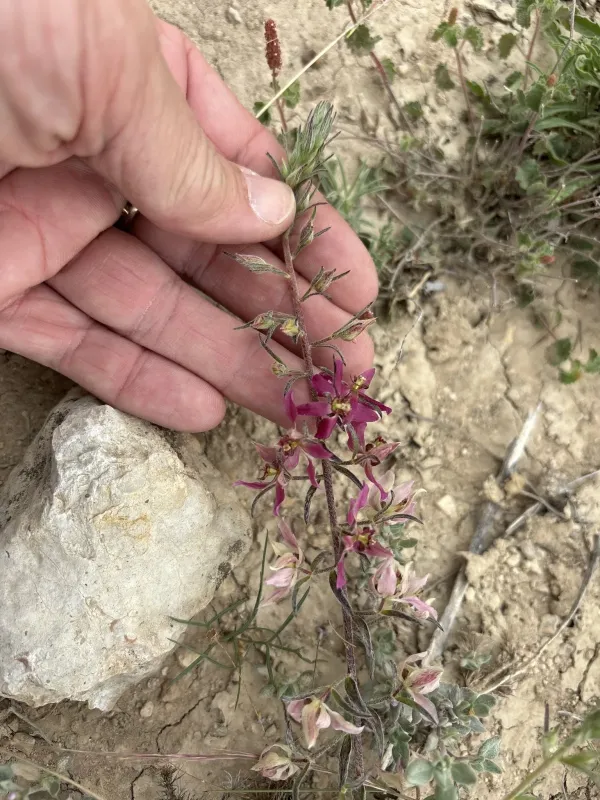
Description
Growing requirements
Trailing ratany (Krameria lanceolata) is a perennial, semi-parasitic plant belonging to the Krameriaceae family. It is native to the arid environments of the Southern United States and Northern Mexico, showing remarkable adaptation to harsh climates.
The plant is biologically distinguished by its ability to extract nutrients and water through specialized root structures called haustoria, which attach to the roots of host plants. This survival strategy allows it to flourish in nutrient-poor desert soils.
Cultivation requires full solar exposure and exceptionally well-draining soil, preferably sandy or rocky textures. Waterlogging is detrimental to the plant, making soil aeration a primary requirement for any agricultural site.
Trailing ratany is highly drought-tolerant, surviving long periods without rainfall. It is well-suited for xeriscaping or specialized medicinal plant production in regions where traditional crop irrigation is limited.
Farmers must pay close attention to the site selection, ensuring that compatible host plants are present to support the health and vigor of the Krameria crop throughout its life cycle.
Main diseases and pests
Trailing ratany is naturally resilient against most herbivores and insects. Its high concentration of tannins and polyphenols serves as a powerful deterrent, protecting the biomass from generalist pests.
The main threat to this plant is root rot, which occurs when there is excessive soil moisture. Managing drainage is the most important aspect of pest and disease control for this species.
Fungal pathogens may occasionally appear in humid climates where poor air circulation exists. Maintaining a proper planting distance is essential to prevent micro-climates that favor pathogen growth.
Weed management remains the most labor-intensive part of cultivation. Because Trailing ratany is a slow-growing species, aggressive weeds must be cleared manually to ensure it receives adequate sunlight.
There are no reports of significant viral diseases, making the crop relatively stable under proper management conditions that prioritize dry and well-lit environments.