
Krameria lappacea
Krameria lappacea
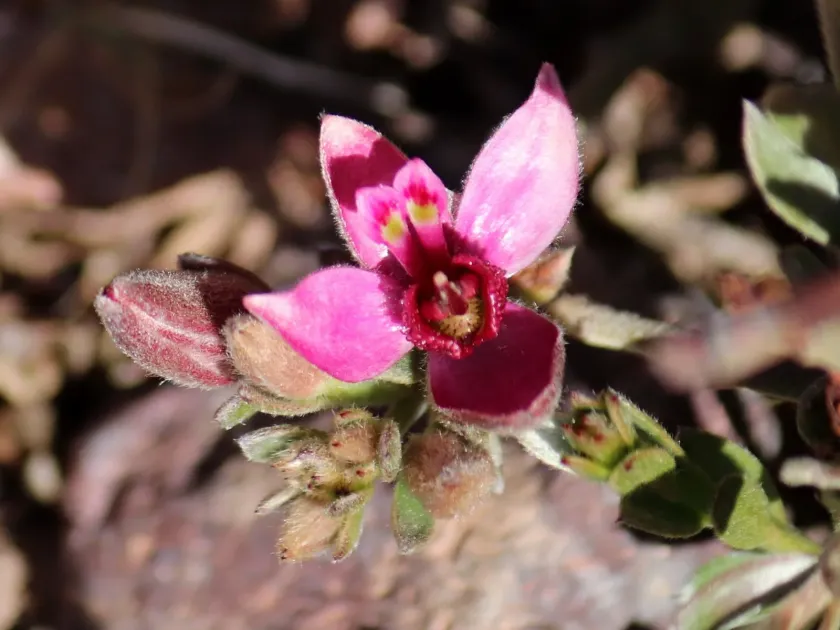
Description
Growing requirements
Krameria lappacea, commonly known as Peruvian Rhatany, is a perennial shrub belonging to the Krameriaceae family. It is historically significant for its medicinal roots, which have been used for centuries.
The plant is a hemiparasite, meaning it derives part of its nutrients from the roots of other surrounding plant species. This biological trait is critical for any successful propagation effort in an agricultural setting.
Native to the high-altitude regions of the Andes, specifically in Peru and Bolivia, the plant has evolved to thrive in arid and rocky environments. It is adapted to high solar radiation and significant temperature variations.
Soil requirements are strict: the substrate must be highly porous and well-drained. Any excess moisture in the soil profile will lead to root rot, making the selection of the planting site the most important factor.
Cultivation requires careful planning of the plant community. Since Krameria lappacea is a hemiparasite, the presence of appropriate host plants is necessary to ensure the shrub receives adequate mineral uptake and water.
Harvesting
The primary economic product is the root bark of the plant, which is rich in neolignans and tannins. These compounds possess strong astringent, anti-inflammatory, and antioxidant properties.
Harvesting involves carefully digging up the roots after the plants have matured. Given the slow growth rate of the species, the harvesting cycle is typically much longer than that of standard agricultural crops.
Post-harvest processing involves thorough cleaning to remove soil debris, followed by drying at controlled temperatures. Maintaining the integrity of the bark is essential to keep the chemical quality high.
The roots are typically used in the pharmaceutical industry to manufacture tinctures, mouthwashes, and specialized dental care products. Quality control focuses on the concentration of active tannin content.
Sustainable cultivation is currently a focus of research to move away from wild harvesting. Maintaining a balance between yield and ecological stability is the primary challenge for future producers.